The Culver Redevelopment Commission (CRC) will be having a special meeting this Wednesday at 6:30. (See the notice to the right.) They are really making an effort to get a good turnout, thus the venue move to the School Admin Building.
The presentation will be from a company called Retail Strategies. They are one of three firms that responded to an RFP the town manager put out earlier this year. As you can see from the announcement, they are proposing to provide consultation on downtown revitalization for Culver, particularly looking at the two downtown corridors on Main Street and Lake Shore Drive.
The discussion at the CRC has been to look into what can be done to make our downtown areas more successful as a first step with future expansion to the rest of the town. This is partially a response to The Dunes and how to provide services for the additional full time residents the town hopes to attract.
I have a conflict, so I won’t be there for this presentation. My two thoughts on what I would have liked to hear are:

This is meant for the downtown merchants, so I hope they step up too. This could be a major benefit to them, but only if they participate and help work the plan. I appreciate the Town Manager and CRC taking this on. They can’t just do it though. They need active participation and help from those affected. The town can assist in this, but the merchants and property owners have to take the reins at some point and make it happen.

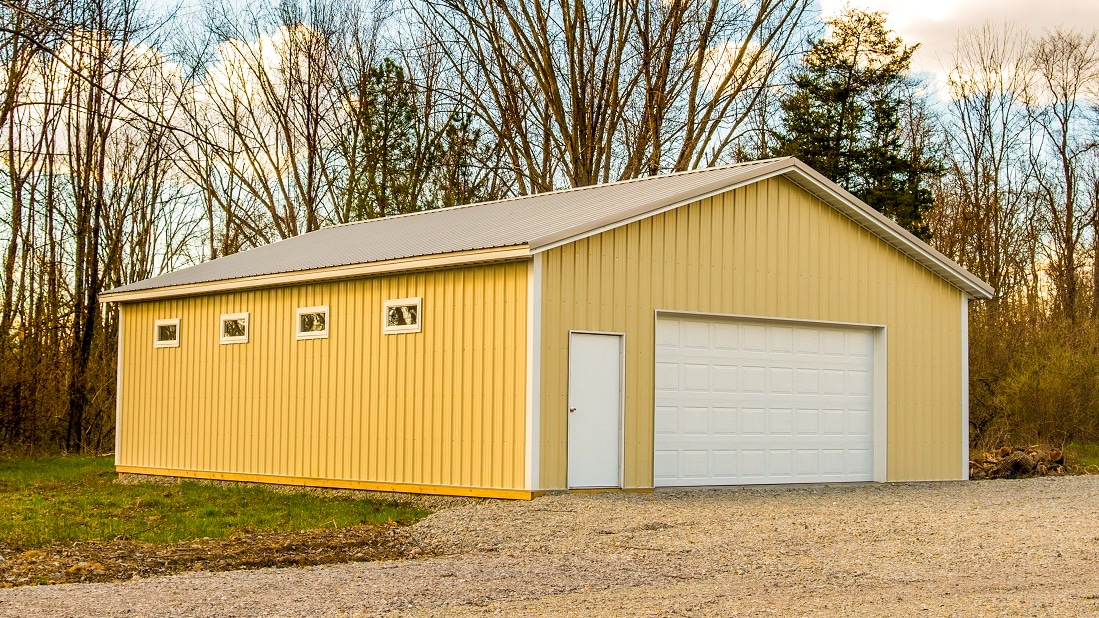
A few years back, there was an effort to ban post frame (also known as timber frame) housing in Plymouth. A similar ban has been floated a few times in Culver and resurfaced at the August Plan Commission meeting. In both cases, the rational has been that the style doesn’t fit the community. As near as I can discern, (and I could be missing something) it doesn’t have much to do with the post frame construction, but more about the look of vertical metal siding, since these homes can be indiscernible from homes built using standard framing.
Post frame construction is most often associated with the “Shade & Shelter” functionality of Pole Buildings. Where post frame barns are designed to protect farm equipment, post frame homes are generally better insulated, stronger structurally, sealed tightly and have a different aesthetic. It’s just a different framing technique that has recently had a resurgence in popularity.

The main difference in this style of construction is the use of posts (poles) to provide the frost protection and uplift protection in lieu of the footings and frost walls used in standard construction. They are nearly always slab-on-grade (SOG) for the first floor. (Many standard construction homes are SOG as well, but standard homes could also have crawl spaces or basements.) Standard construction will use 2×4 or 2×6 studs at 16″ or 24″ on center to form the shell. Post frame buildings have posts spaces as much as 8′ on center with horizontal 2x4s girts to support the siding. Standard construction will have trusses or rafters at 24″ on center, where post frame buildings space out the trusses to bear on the posts and then use 2×4 purlins to support the roofing materials.
For a pole building, the big advantages are the ease and speed of construction. The construction is very forgiving. It is generally a big box to provide the most cubic feet of storage with the minimum of effort. They tend to leak and creak over time, but provide the basic shelter function needed. For a post frame home, there are a lot of enhancements:
While some of these homes embrace the barndominium style, such as the one to the right that even includes a simulation of a silo, they often are hard to distinguish from their neighbors. It’s not the framing that determines the exterior aesthetic, and in many cases you wouldn’t know the framing style if you didn’t see it under construction. Three of the apartment buildings at The Paddocks have a definite barn aesthetic, yet they were stick-built.
Stating that the style doesn’t fit the community seems a particularly curious thing to say about a home in Culver. Culver has a myriad of building styles ranging from traditional to bungalows to A-frames to geodesic domes. Culver has exterior finishes ranging from siding to painted concrete block to limestone to fieldstone. The siding breaks down to various styles including vertical, horizontal and diagonal. We have buildings with vinyl, steel, aluminum and wood siding. Culver is allowing new construction to expand in size to the point that they encourage replatting/combining of small lots to accommodate the larger construction.
Some communities establish aesthetic requirements. Culver doesn’t have these. As it stands, they’re zoning decisions are based mostly on safety. Post frame verses traditional framing is more of an issue for building codes and as of this time it is allowed. Many would object to the use of vibrant colored residential standing seam roofs as not fitting the traditional aesthetic, but nothing has been said about banning those. Personally, I’m fine with the diversity. Culver shouldn’t stoop to the level of a group of Karens. A flock of Karens is known as an HOA. Culver shouldn’t go there. (Neither should Plymouth…)

Steve Gorski, Culver Building Commissioner, has stepped up to the task of updating the Culver Zoning Ordinance. Having served on multiple committees to do this, I know this can be a mind-numbing and somewhat thankless task. This was one of the goals of the 2024 Comp Plan and Mr. Gorski has tackled it. At the last meeting, he presented a lot of the changes and corrections he is proposing. It wasn’t really open to the public for discussion, but was handled as a line-by-line presentation to the commissioners.
For 100% of what he presented, I appreciated what he was trying to do and the clean-up it represented. I think there was 10% that could have been improved by some additional input. My concern with the current approach being taken is two-fold:
There is also the factor that Mr. Gorski has only held the position for a couple of years. I’ve written about “Institutional Memory” here before. This applied to more than a few items that he suggested changing. A couple examples just in the category of height restrictions:
The ordinance is meant to be somewhat of a living document, so I am by no means saying that these things are written in stone. But the institutional memory of why they are there, could temper the decision to change them.
A couple larger items I struggled with on the changes were:

Overall, I commend Mr. Gorski for taking the bull by the horns and moving something forward. I hope the Plan Commission continues to work on this and takes the next steps recommended by the Comp Plan.
Hard to believe it’s been 10 years since Becky decided that she could provide better service to her patients on her own than through her previous employer. At that time, her employer began dictating maximum 20 minute appointments, not understanding that a hearing test takes an hour. That was the straw that broke the camel’s back. She is not able to spend the time she needs to with her patients. It’s not nearly as lucrative, but she’s pleased to be able to provide better care.
Jamie Fleury did a nice article on Dr. Becky’s Berger Audiology 10 year Anniversary Open House last Thursday. Somewhere around 34 attended. She is planning a second event for Physicians and professional colleagues next month.
City of Plymouth, IN-Mayor’s Office was represented by Mayor Robert Listenberger and City Attorney Jeff Houin. Future Marshall County Sherriff, Les McFarland, was there as well as Matt Hovermale from the Plymouth Chamber. Seven nuns from the The Poor Handmaids of Jesus Christ also attended. Naomi Peacock won the award for the youngest attendee. We won’t disclose who was the oldest! Becky was pleased with the turnout! Thanks to all that attended. ![]()
![]()
Veterans Day Celebrations in the Midst of Turmoil – J.R. Gaylor
November 11, 2025
Kevin Berger
Commentary, Guest Post, Politics, Tips
ABC, Commentary, Community, government, Politics, Tips, Trends
With turmoil foreign and domestic, we pause today to celebrate the living veterans for their service, their patriotism, their love of country and willingness to sacrifice in defense of our country. As important as it is to defend ourselves against foreign threats as our veterans have nobly served, there are some very insidious threats we are facing with America against itself.
Specifically, I am referring to the acceptability—by far too many—of the lawlessness we see happening, as well as the twisted logic behind the lawlessness.
We are seeing the direct contrast of the “broken window” theory versus “progressive criminal justice” model.
The theory of the “Broken Window” holds that addressing minor crimes like vandalism, public intoxication, and minor theft creates an atmosphere of order and lawfulness versus “progressive criminal justice” which promotes reforms such as ending cash bail, not prosecuting misdemeanors, and early release of offenders.
The justification behind this “progressive” thought is ‘because someone told a lie, it doesn’t make them a liar’. Or ‘because someone took a bribe, it doesn’t make them corrupt’. In other words, ‘if a crime is committed and no one is responsible, was there actually a crime at all’?
Famously said, “a great civilization is not conquered from without until it has destroyed itself from within.”
Next July 4th, we will celebrate 250 years of the great American experiment of Independence under a Constitutional Republic from which we aspire to form a more perfect union, establish justice, ensure domestic tranquility and provide for the common defense.
Let us aspire to recapture that vision.
J.R. Gaylor President/CEO; ABC IN/KY
0 comments