“Our governments and our business and political elites are not mainly made up of stupid people. One of the shocking things about getting to know people in government, whether in elected office or in the bureaucracies, is that they are mostly bright, well-intentioned, and honest. Together they represent a sterling example of one of the most important and least understood of modern social paradoxes: None of us is as dumb as all of us.”
I’ve always thought the State of the Union address was a fairly worthless endeavor and actually, as an American, somewhat embarrassing to watch. Kevin Williamson put it pretty well in an article he wrote last year for the National Review titled Great Caesar’s Ghost. If you’re interested in reading it, I’ve linked it here. The first paragraph is in the box to the right to whet your appetite.
The whole idea of a State of the Union address rises from Article II, Section 3 of the U.S. Constitution describing the powers of the President which says: “He shall from time to time give to the Congress Information of the State of the Union, and recommend to their Consideration such Measures as he shall judge necessary and expedient; he may, on extraordinary Occasions, convene both Houses, or either of them, and in Case of Disagreement between them, with Respect to the Time of Adjournment, he may adjourn them to such Time as he shall think proper; he shall receive Ambassadors and other public Ministers; he shall take Care that the Laws be faithfully executed, and shall Commission all the Officers of the United States.”
From what I have gleaned, George Washington did meet with the Congress in what was the first State of the Union “report”, but when Thomas Jefferson became President, he deemed the practice of addressing Congress too “kingly” and began the practice of sending written reports. This proved satisfactory for 112 years until President Woodrow Wilson changed the tradition to a formal address to Congress. This has morphed into the political spectacle we’ll be subjected to tonight.
Lest this be considered just Obama or democrat bashing, let me heap some of the blame on President Reagan for making things worse. He is responsible for the odious new tradition of placing “guests” in the audience which serve as props for the political messages in the speech. And as Mr. Williamson says in his article, “The next Republican president should remember why his party is called the Republican party and put a stop to this.” Hear, Hear!
Consider the Sources: Almost totally Internet; some from Mr. Williamson’s article and some from other searches.
It appears that Culver will be without a Town Manager again. Dave Schoeff‘s resignation was announced in the Culver Citizen last week. Our track record on retention for this position hasn’t been great, but I think good things have come from this position and I hope the Council will move quickly to fill it.
I have been involved with the Town Manager issue from the beginning. I was involved with the Culver Second Century Committee through the Mary Means & Associates Needs Assessment and the Ratio Architects Charrette (1998). The subject of a Town Manager was discussed in both of these. When the first Town Manager was hired, a task force was formed including Town personnel and members of the public. I was one of the latter. Other task force members included Chandra Meavis (Town Clerk), Russ Mason (Councilman) and Lance Overmyer (Fire Chief).
The task force spent a considerable amount of time doing an internal assessment. I have to admit that I was skeptical that it could work in Culver, but after listening to presentations from three different Town Managers from area communities of a similar size, I was swayed to believe that Culver could truly benefit from the creation of this position. What made the difference for me was that two of the Town Managers that we interviewed had no formal training in government, but were good managers and were extremely effective in organizing their respective towns to run better because of this.
The task force took on the creation of a job description and the creation of a chain-of-command hierarchy. We also defined the function of the department liaisons, something that was a carry over from before we had a Town Manager. From there we wrote the ads for the position and culled the applicants down to three. At that point, the Town Council joined us in interviewing the final three applicants and our first Town Manager, Mr. Jeffrey Sheridan, was selected. The task force was disbanded at that point. In retrospect, that may have been a mistake. Our experience in researching and defining the position may have been useful in working with the new Town Manager and the Town Council in order to make the position successful. Since I was not a Council Member, I was not briefed on all the “problems” that led to Mr. Sheridan leaving, but at least some of those problems regarded issues that we thought we had settled. (Jeff went on to serve as the Town of Cumberland Town Manager for 8 years and is currently the Tipton County Economic Development Director.)
Since that time we have had four other Town Managers bringing the total to 5 in 10 years. All resigned for different reasons. All five Town Managers advanced the agenda of the Town and were able to accomplish things that part-time Council Members cannot be expected to handle. In the time before and between Town Managers, much of the administrative work has fallen on the Clerk Treasurer. This is not fair to the Clerk Treasurer as they have other responsibilities and often their need to work with the employees and the Council makes it difficult to also wear the hat of “manager”.
I’m concerned that the limited retention rate of Town Managers in Culver will affect our ability to hire another. From past experience, the task of replacing the town manager has been tedious and slow. In the interim, projects languish and at times past advancements are lost. Hopefully the Council has already begun advertising the position.
I was pleased to be the guest of Dave Behr and the IDEC (Indiana Economic Development Corporation) on Sunday for the Colts/Ravens game. I was there representing MCEDC (Marshall County Economic Development Corp.) along with Jerry Chavez. Several business leaders were also in attendance as well as Mayor Senter from Plymouth. I’ve decided that watching the game from a suite is the way to go! Ha!
The game was a good one and the networking opportunity was good as well. It’s good to speak to people outside their normal work environment sometimes. Those connections can be important.
Speaking of those connections, all of us from Marshall County also got to meet and speak briefly with Governor Pence. I don’t expect that he knows my name, but I think he’s seen me enough now to recognize my face and know some of my issues.
This was my first NFL game and that in itself was quite an experience. Experiencing the crowd and seeing the stadium was all new. Of course I can’t walk through a parking lot without looking at the drainage patterns or walk through a building without assessing the details. Looking at the stadium structure with the retractable roof and such was fascinating.
All and all it was a good time and I think the discussions were worthwhile. I will definitely go again if invited.
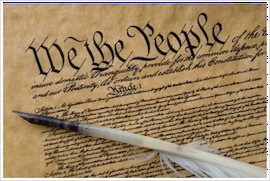
I’ve yet to hear mention on the news today that today is Constitution Day, otherwise known as Citizenship Day. Hopefully it is still discussed in our schools.
Our Constitution remains one of the most succinct documents of its type and despite being written centuries ago, it continues to hold the guiding principles that have made the United States great. That’s why it is disheartening when our leaders, those sworn to uphold it, disparage it. The most notable case of this that jumps to mind is Justice Ruth Bader Ginsburg‘s comment during the reorganization of Egypt that, “I would not look to the US constitution, if I were drafting a constitution in the year 2012.”
Take a moment today to remember the 39 brave men who signed that document in 1787. Their courage and commitment should be celebrated.
If you are interested in additional links and comments I’ve made on Constitution Day, use the search bar to the right.


.jpg) The task force took on the creation of a job description and the creation of a chain-of-command hierarchy. We also defined the function of the
The task force took on the creation of a job description and the creation of a chain-of-command hierarchy. We also defined the function of the 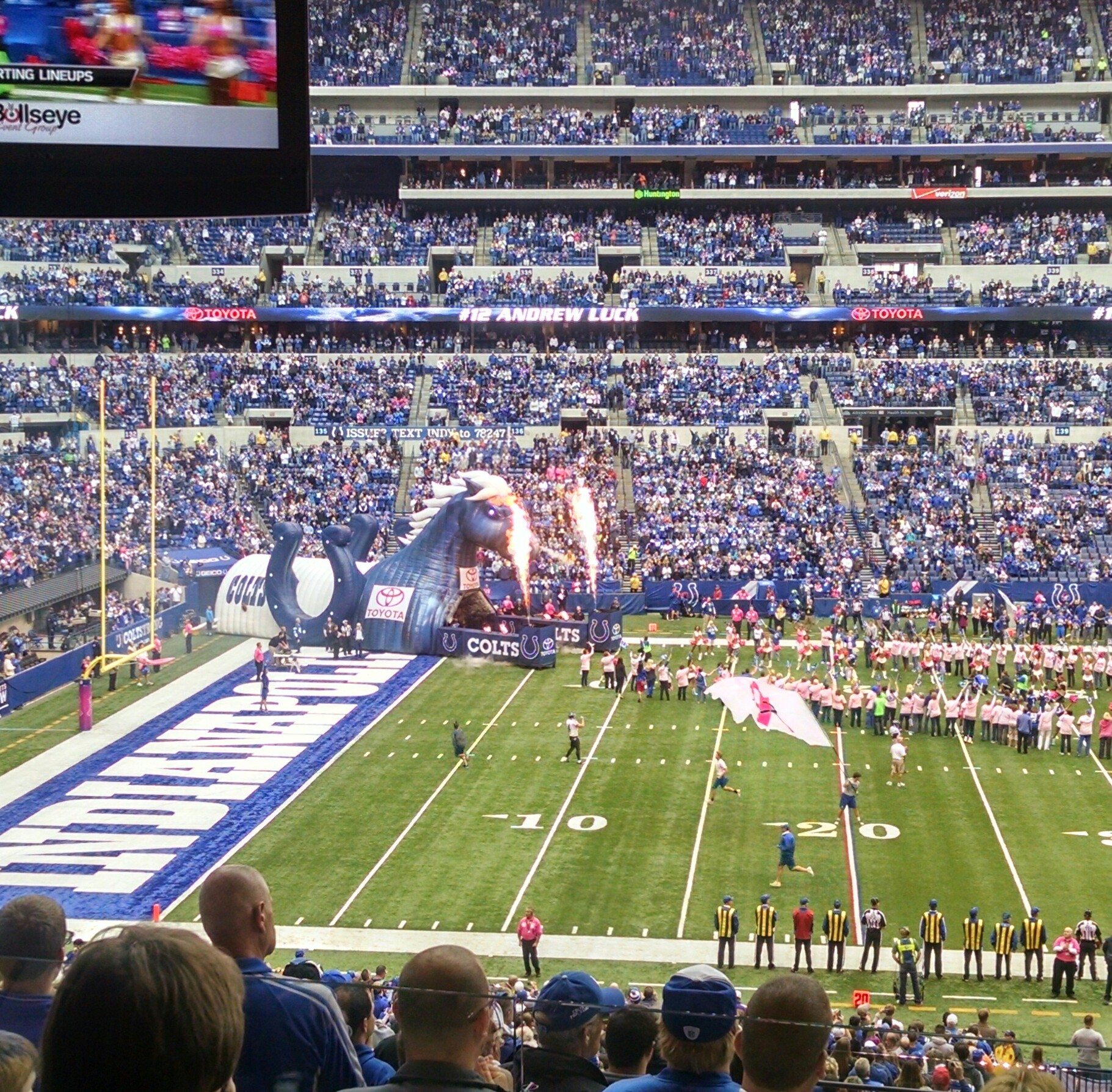

 I’ve yet to hear mention on the news today that today is