Max’s Playhouse at the BZA

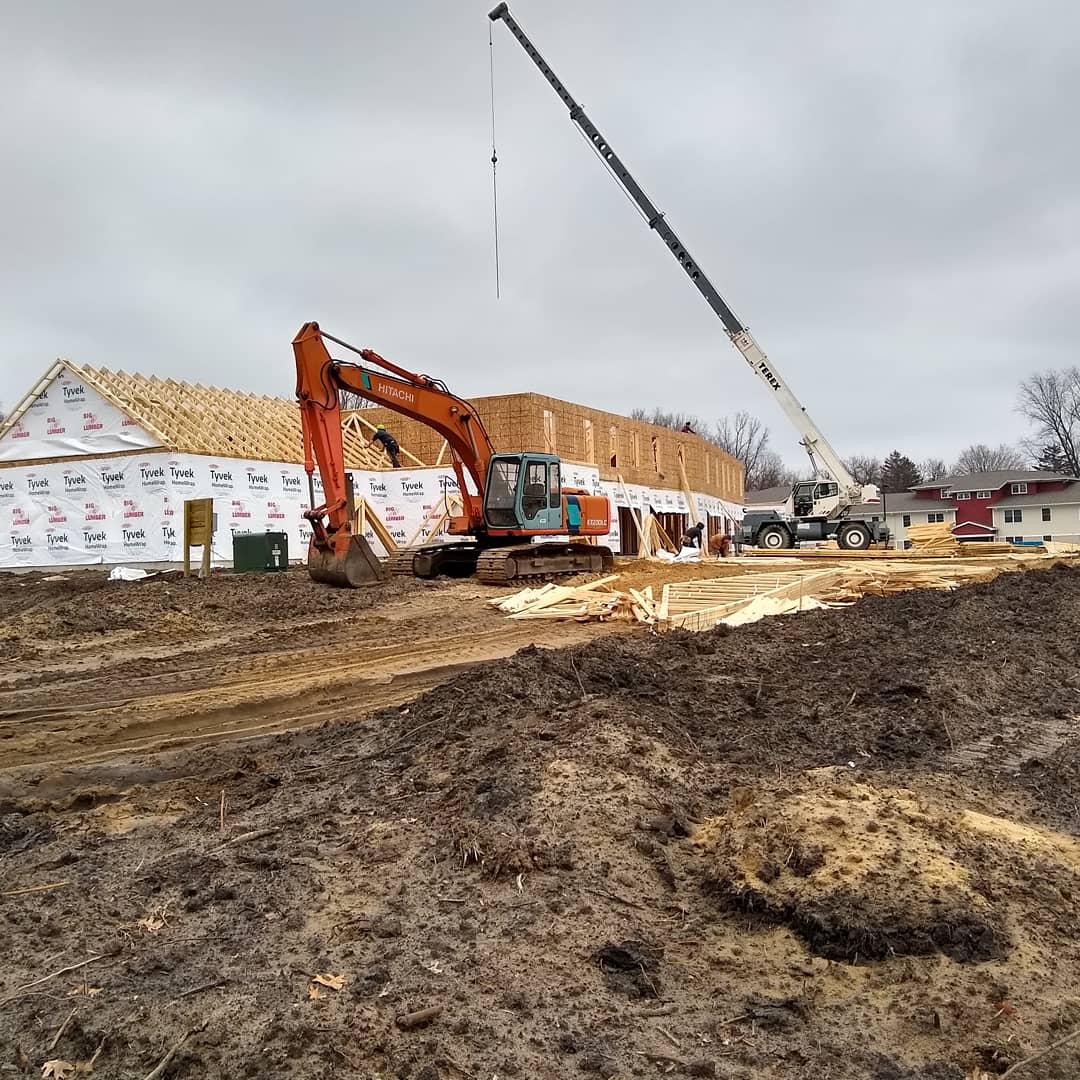
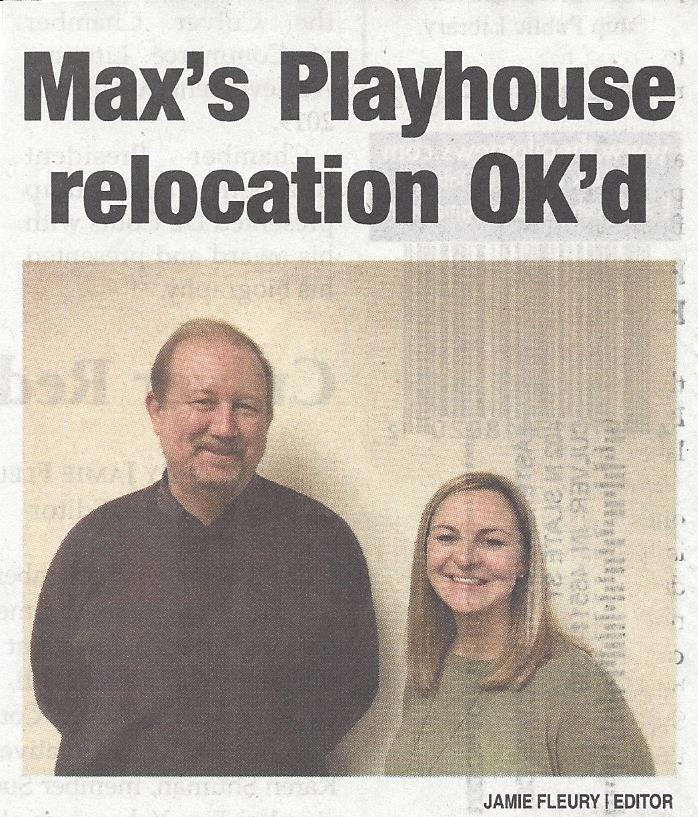
Last Thursday Brandy Pohl appeared before the BZA to get a Special Use Variance for Max’s Playhouse‘s new location at 450 & 454 School Street. I’ve been helping Brandy through the construction process and appeared with her at the variance hearing. The article to the right appeared in the December 26th Edition of the Culver Citizen.

Max’s Playhouse is an interesting project as it is basically residential construction with added caveats required for licensing as a child care provider. Brandy knows her requirements backwards and forwards, but blending those into residential construction has created a few challenges for us.

The location on School Street seems to be a perfect one as it is grouping three of the main child care providers, Max’s Playhouse, Culver Community Schools and Wesley Church within a two block area. There are some issues with the traffic flow which Brandy hopes to work out with the Town Council soon. Solutions there could affect the budget and the work she hopes to do.

Dan Adams

As a personal side note, the BZA is a tough sell when the Town is looking for citizens to serve. Very rarely do all sides appearing before the board leave happy. Dan Adams has served on that board for years. He demonstrated his pragmatism and tact again Thursday night as he condensed the hearing down to the basic issues and brought the board to a unanimous decision. There was some public opposition, but most of it didn’t pertain to the issues before the board. He allowed the audience input and then tactfully ended it before it became contentious. I was pleased to hear that Dan has agreed to serve another term on the board. His steady hand there has served the Town well. I always know I will get a fair hearing when Dan runs the show.

Marshall County Crossroads Presentation at the Statehouse

Sean Surrisi speaking about the Rees Theater project

Tuesday morning I braved the elements to head to Indianapolis to support the Marshall County Crossroads team for their Stellar Presentation. This was their last effort and last chance to make an impression on the State officials that would be judging the competition this year. This was Marshall County’s second attempt at Stellar Region Designation. The experience they gained last year showed.

Linda Yoder speaking about Quality of Life Initiatives

I had attended the workshops at Swan Lake, served on the housing committee and helped with the LIHTC portion of the application, so I was familiar with the goals and the changes from last year. I think this year’s application was much stronger than the year before. It was obvious that community engagement was better and the initial partnerships had grown. There was a lot more buy-in from community groups. An example of these expanded buy-in was through the Marshall County Community Foundation (MCCF). They purposefully reviewed the grants in their Fall round for projects that enhanced not just the Stellar application, but the overall Quality of Life plan. Linda Yoder, MCCF Executive Director, was one of the presenters.

Jonathan Leist speaking on the Owner Occupied Housing Initiative

Last year there was no IHCDA LIHTC project, but this year I stressed the importance of including LIHTC. This year there were two – one in LaPaz and one in Plymouth. I met with representatives of all of the communities, but only LaPaz and Plymouth felt that LIHTC was a fit for them, were able to come of with property and were willing to pass supportive resolutions. Brent Martin of SRKM Architecture also stepped up to spearhead the IHCDA Owner Occupied Housing portion of the application, so overall the housing section stood out.

The Presentation Team on stage fielding questions

While the presentation was well done, what really stood out was the Question & Answer section at the end. All the presenters were seated on the stage and the State Agency’s asked them questions about the initiatives. The answers were provided seamlessly by various representatives and without any competition for the microphone. They worked well together as a team. Some of us were in the audience as back-up if in depth questions came up. There were very few of those that the presenters couldn’t answer on their own. They were well prepared.

The team had arranged for students from some of the schools to be there. Unfortunately, due to the weather, the number of students were limited, but because of the efforts made to involve them, the attendance was appreciated. At one point, somewhat out of the blue, the INDOT representative turned to the students and asked them questions. With no preparation or expectation of this, the two students that spoke answered the questions flawlessly! Very Cool!

Overall I was impressed with Marshall County’s leadership for stepping up to this. The highest Kudos go to Ginny Munroe, Culver’s Town Council President, for stepping up to this challenge. On the heals of Culver’s Stellar Designation, this was a big undertaking. Culver has been moving their Stellar projects forward while this has been happening at the County level. Despite this, Ginny stepped up and lead our region, building on the experienced gained in Culver. I think that was key to making Marshall County competitive. If Marshall County wins, Culver’s assistance will have been a huge part of making it happen.

Big Splash

This past Saturday saw the individual ribbon cuttings for the combined Marshall County Philanthropy Center and the Dr. Susan Bardwell Aquatic Center project. The picture above is from The Pilot News documenting the speeches that were given before the ribbon cutting at the Philanthropy Center.

I represented Culver on the Marshall County Economic Development (MCEDC) Board and the Marshall County Community Foundation (MCCF) Board when these projects started. I helped more on the development side while at MCEDC and then helped MCCF with architectural plan reviews, construction site visits and oversight advice. I sometimes give public boards and commissions grief about not making the best use of community knowledge. Sharing expertise is the most valuable form of volunteering. MCCF took full advantage of what I could offer and I was glad to share it. A win-win all around! It’s always better to get involved than to just complain.

Heritage Park Mural

Sometimes our projects make the news. Sometimes it’s our staff. This time it’s equipment! We are leasing scaffolding to the Town of Culver for the mural being completed on the wall of The Garden by Elizabeth. The picture above appeared on the front page of the Oct. 3rd, 2019 edition of The Culver Citizen. The new mural will be a bold addition and eye-catching update to the Park. It has been interesting watching the progress.

The tie-in is interesting because Easterday Construction Co., Inc. built the trellis and arbor for the original Heritage Park. (See a post regarding the carpentry work we completed here.) Since that time, some of the structures suffered from age and “deferred maintenance”. Some of the plantings are past do for some thinning.

Landscapes change and parks adapt to new uses over time. It’s not surprising that there is a new vision for the park. A lot of thought went into the original design though and I hope some consideration is given to the vision and investment of Richard Ford, Richard Fisher, Mark Holeman and others when they originally created Heritage Park, not to mention the loving care Ansel “Bud” Cripe put into the construction.

Interesting Take at the Plan Commission

I attended the Culver Plan Commission with a client Tuesday night. I was a little surprised to be called out in front of my client regarding another project, but so these things go.

Some Background: Last month I appeared for the Secondary Plan Review for the PUD (Planned Unit Development) needed for construction of The Paddocks. The project is one of the signature pieces in Culver’s Stellar Strategic Investment Plan and had been before the Plan Commission multiple times. It passed with one dissenting vote. I wondered about that vote, but never questioned it. It was their right to vote against the project. If they had expressed their objections before the vote, I could have provided a rebuttal to their objections, but after the vote it was a moot point.

Tuesday, that commissioner chose to elaborate on their no vote. To paraphrase, their objection was that all ordinances should be treated equal and since the Town had adopted a Complete Streets ordinance, and The Paddocks had agreed to provide a trail connection through The Paddocks property, the developer should have been required to exhaust all options to continue the trail through the adjacent property. The Developer should also be held to a higher standard due to the Tax Abatement awarded to The Paddocks.

A few things bothered me about that, but again, it was water under the bridge so I did not attempt to address it at that meeting. This is my venue to vent though, so here are my thoughts:

  1. I was disappointed that this was brought up after the fact when I was there with a client for another project. I thought that was inappropriate as it put me in an undeserved negative light when the project I was there for had nothing to do with The Paddocks.
  2. Complete Streets aside, this has not been a standard applied in the past. The last PUD developer was asked to provide trail access and as with The Paddocks, they provided access up to their property line. The adjacent property owner was not amenable to a trail through their property, so that was left to be addressed in the future… similar to what was done with The Paddocks. In that case, that development was not even required to provide the future Right-of-Way that was called out in the Comprehensive Plan because adjacent property owners were not supportive. The Paddocks PUD was required to dedicate additional Right-of-Way that wasn’t part of the Comprehensive Plan or part of the current project. The Town will be setting a high bar to hurdle if they choose to start requiring developers to purchase or negotiate rights to additional property outside the initial development.
  3. The Paddocks PUD did receive some matching funds and a tax abatement from the Town, but this was done because incentives were required to get the housing that the Town had made a goal. This also allowed the Town to receive matching funds from the Regional Cities Initiative (RCI) and qualify for the IHCDA LIHTC program. These were very public negotiations. Making one sided changes to those agreements will make developers leery of working with the Town. On a side note, to my knowledge, this is the only RCI funded project where that funding is given to the Town through the Developer. In the awards of which I have knowledge, the RCI funding went to the Developer.
  4. Originally, and in all the Stellar discussion, this property was to connect to the Town via the revitalization of the Jefferson Street corridor. That was to be the “Complete Streets” connection. It was not until later that a request came for a connection to Cass Street. The Paddocks did agree to provide a trail connection to Cass Street, but was required to do so now despite some objections, one of which was the lack of a connection through adjacent properties. The preference would have been to provide the connection at a later date when it would have connected to Academy Road. Connecting to Cass Street was also an option, but it would have made more sense to wait until the Town had worked out a route with adjacent property owners.

As I have said many times in the past, I respect the volunteers that serve on public boards and commissions. They take more slings and arrows than ever gets balanced out with accolades. That doesn’t alleviate their responsibility to know all the facts. In this case, some of the commentary was counter to things previously negotiated with the Town Council and the Plan Commission’s own Technical Review Committee. Speaking from the table at the front of the room gives their voice additional weight. That needs to be used judiciously.

Obviously this commissioner’s take differs from mine. Fortunately for me, the project and the Town, his position wasn’t shared by the other commissioners.