Outdoor Living Project II

We previously told you about our work on an outdoor living project here.  Indiana weather hasn’t helped us with progress this Spring.  We had to wait for the weather to warm up enough to complete the masonry on the fireplace before we could make the tie-in with the rest of the structure.  Once that happened in March, we were able to complete the framing, but then April came with nearly constant rain delays.  Since that time we have completed the roof structure, installed the shingles and the EPDM roof on the flat section.  We have completed the barrel ceiling framing.  We have also completed the perimeter retaining wall.

Next on the schedule is the electrical rough-in.  The Owners finalized the lighting layout and have made most of the fixture selections this week.  We will be running the electric in flexible plastic conduit for maximum future options.  The Owners use a computerized lighting and security system in their home.  This system will be extended to the cabana to allow remote control of the lighting and other electrical systems.

We are also about to begin the installation of masonry walls that define the room.  The walls are solid core decorative retaining wall blocks that are designed for mortarless installation with vertical installation.  The critical area will be around the kitchen area where the interior dimensions are crucial for the kitchen cabinets and appliances while the exterior dimensions are crucial to the column alignment and hurricane shutter locations.

Check back for futher updates where we’ll have additional pictures of how it all comes together.

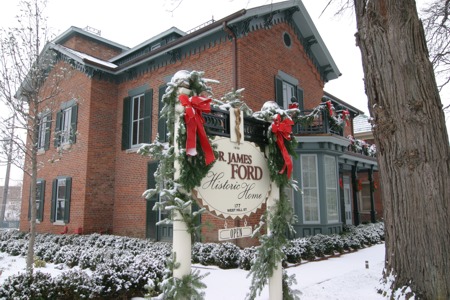
Historic Renovations

We have completed many historic projects over the years.  If you are considering a historic renovation project a 20% tax credit is available as an incentive to encourage you.  The first step is to see if your proposed project qualifies.  Here are the Secretary of The Interior’s Standards for Rehabilitation:

  1. A property shall be used for its historic purpose or be placed in a new use that requires minimal change to the defining characteristics of the building, its site and environment.
  2. The historic character of a property shall be retained and preserved.  Ther removal of historic materials, or alterations of features and spaces that characterize a property, shall be avoided.
  3. Each property shall be recognized as a physical record of its time, place and use.  Changes that create a false sense of historical development shall not be undertaken.
  4. Most properties change over time; those changes that have acquired historic significance in their own right shall be retained and preserved.
  5. Distinctive features, finishes and construction techniques or examples of craftsmanship that characterize a property shall be preserved.
  6. Deteriorated historic features shall be repaired rather than replaced.  Where the severity of deterioration requires replacement of a distinctive feature, the new feature shall match the old in design, color, texture and other visual qualities, and if possible, materials.
  7. Chemical or physical treatments, such as sandblasting, that cause damage to historic materials shall not be used.
  8. Significant archaeological resources affected by a project shall be protected and preserved.
  9. New additions, exterior alterations or related new construction shall not destroy historic materials that characterize the property.
  10. New additions and adjacent or related new construction shall be undertaken in such a manner that, if removed in the future, the essential form and integrity of the historic property and its environment would be unimpaired.

Historic renovation is also one of the most green forms of construction.  Finding a new use for a historic building may well save the structure from the landfill.  Careful analysis should be conducted, though.  Old is not always historic.  Historic structures are notorious for construction cost overrun issues as well as operational costs that exceed those of new construction.  As the project is considered, it must be determined if the project is being approached altruistically or for profit.

Read more

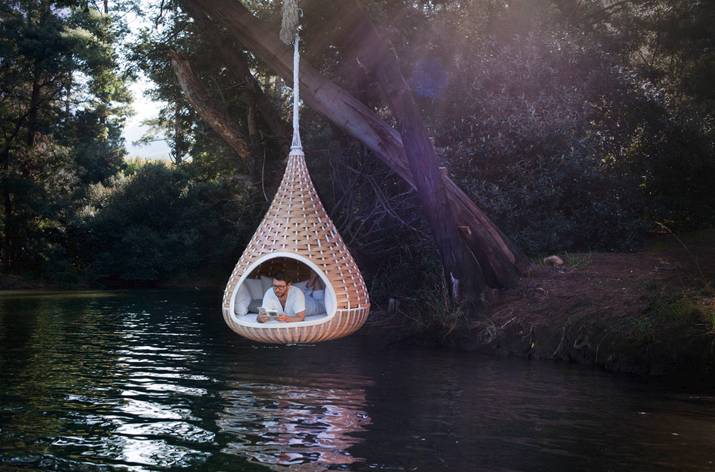
Nestrest: And now for something completely different…

So how do you get into your secluded, suspended sanctuary when you place it over water?  In any case, I ran across this and thought it was interesting.  If you have the right location and a big enough tree to support it; a wicker swing that looks like a Hershey Kiss and seats 2 or more?  Cool!  This is the Nestrest.  It’s a hanging lounger.

This is a product by DEDON.  If you’re interested in one and want to see more pictures, go here.  If you understand the ostriches, let me know…

Green = Many Things

Where is it written that a green-built home must be small?  Monthly energy bills determine a home’s carbon footprint, not its size.  In fact, a 10,000 square foot house with zero energy bills is far greener than a 1,500 square foot energy hog.

I would argue that a large home built with no wood, using concrete, steel, and polystyrene (a petrochemical product) is far greener than a smaller home built with wood.  This is because the concrete house can last 300 years with no maintenance, while the “earth-friendly” wood house is subject to mold, mildew, rot, termite and fire damage (despite being recycled, reclaimed, salvaged, or sustainably grown FCS-certified).

The periodic replacement of inferior building material, such as wood, is far more wasteful to our natural resources than a concrete house built to last.  Durability trumps embodied energy.

Green building encompasses five elements:  durability, energy efficiency, water efficiency, indoor air quality, and the environment – not just the environment alone.  A fact sometimes lost on many advocates of green.

Dueling theories aside, there is one thing on which all building science experts agree.  To save money every time, place resources into the exterior building shell envelope, not into mechanicals or renewables.

Lee Hitchox – Taken from BMail; Builder Magazine