Definition of a WECS per the Culver Zoning Ordinance – 2010-007:
Wind Energy Conversion System (WECS) – Equipment that converts and then stores or transfers energy from the wind into usable forms of energy and includes any base, blade, foundation, generator, nacelle, rotor, wind tower, transformer, turbine, vane, wind farm collection system, wire, or other component used in the system.
Below are some WECS’s that are not traditional wind farm turbines that could fall under a WECS ban.
At the October Plan Commission meeting, the discussion on WECS’s continued. (Previously discussed here.) The Commission could not come to enough of a consensus to formulate a new Ordinance but they did take a series of votes that defined several of the issues. It would appear that proponents of banning WECS’s are achieving most of their goals. If they proceed along their current path, Culver residents would not be allowed to have a WECS that produces more than .5 kilowatts in the lake district, park district, and R1 residential district as well as within 1/4 mile of any of those districts.
I would still contend that the proponents of the ban are too focused on their distaste for the aesthetics of current wind turbine technology and fail to consider the advantages that could come from advances in the field.
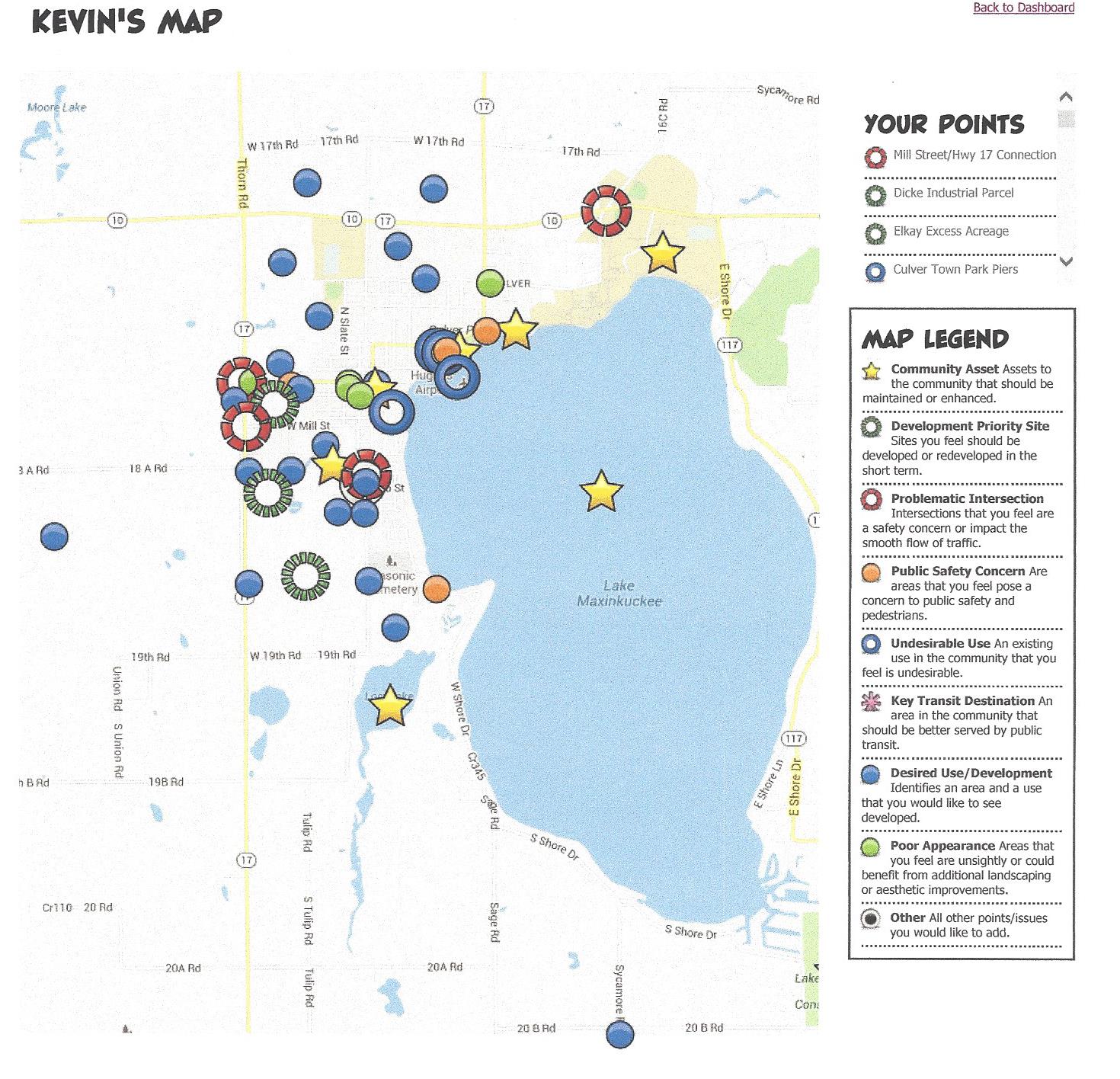
If you haven’t done so yet, check out the mapping tool at the Culver Comprehensive Plan site here. The one I did (see right) looks like it’s pretty diseased! Others have done them and only put one or two things on there that were of most importance to them.
Each dot and symbol on the map to the right has a different meaning and text associated with it. If you go to the site, you can look at any of the maps that have been created by others and read the comments they have made. Make your own map. If all you do is reiterate what someone else has said, you will add weight to that issue. If you have specific goals or comments, this is the place to get them heard. Developing a new Comprehensive Plan is a team sport. Get on the team!
I received the results of an NFIB survey today that I thought would be worth sharing. You can read the entire report here, but the gist of it is contained in this quote:
“After two months of incremental but solid gains, the Index gave up in June. This appears par for the course, given that there is no reason for small employers to be more optimistic and lots of things to worry about,” said NFIB chief economist Bill Dunkelberg. “Washington remains bogged down in scandals and confidence in government’s ability to deal with our fundamental problems remains low. Economic growth was revised down for the first quarter of the year and the outlook for the second quarter is not looking good. Nothing cheers up a small-business owner more than a customer, and they remain scarce and cautious while consumer spending remains weak and more owners are reporting negative sales trends than positive ones.
It certainly doesn’t help that the endless stream of delays and capitulations of certain provisions of the healthcare law adds to the uncertainty felt by owners. Until growth returns to the small-business half of the economy, it will be hard to generate meaningful economic growth and job creation.”