Canopy Stairs are a cool idea I ran across in a tweet from the Hager Group. Designed by a pair of graduates of the Royal College of Art, the stairs create a spiral stair case around the trunk of a living tree without harming the tree.
While the whole system was worked out with consultation with arboriculturists to assure there would be no detrimental effects on the trees, there sure is a lot of backlash from the tree huggers in the comment section at the bottom of the article. What they seem to be missing is that this is designed to be a temporary, reusable system. The system is designed to distribute the loading around the trunk and would appear to minimize any damage to the tree. As a Landscape Architect, I would suggest this is good stewardship. It enhances the highest, best use of a natural resource with minimal or no damage.
Artist’s rendition of downtown Sandpoint, Idaho – Home of Solar Roadways Graphic design by Sam Cornett
I ran across this site for Solar Roadways the other day. This is a pretty cool concept if they can get it off the ground. The basic concept is to “pave” roads and sidewalks with durable solar panels. Not only would they generate electricity, theoretically paying for themselves, but also have benefits:
Lighted Pavement Markings, which would be below the surface. They would never need to be “restriped” and would be visible at night.
They would have internal heating elements to melt snow in the winter time.
Power street lights, stop lights, etc.
They could post emergency messages or warnings.
Include sensors that could alert motorists to problems down the road.
It seems like there are lots of possibilities if this works out. It’s conceivable that every home could have a driveway from this material as supplemental power.
The company is generating funds from a Federal Highway Grant as well as crowdfunding. (Linked at their site.) Check them out. They have a lot of cool pictures… some conceptual and some actual prototypes.
My post regarding Starter Home Barriers sparked some conversation about the square footage of a starter home, particularly regarding the 2,000 minimum home size discussed in the Builder magazine article. Many of the points about that possibly being unrealistically large for Culver were valid. Since I was paraphrasing the article in the previous quote, it seemed appropriate to stick with their numbers and rationales.
3 bedroom/2 bathroom home Plan by Zero Energy Design
In any case, the discussion prompted me to do a little further research into smaller home sizes. I did find the Zero Energy Design website which included several smaller residential footprints ranging from a 1 bedroom/1 bathroom at 624sf to a 3 bedroom/2 bathroom at 1120sf. (Apparently in a ZED home no one watches TV as they don’t even appear to allow a place for one in their room furniture layout.) While I know the boxy design is the most efficient, I would hope we can be a little more creative in our floor plans.
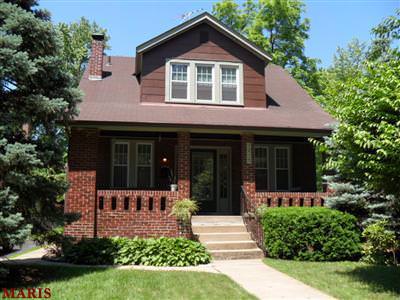
1-1/2 story house with porch and dormer from Hermann London
I also notice that almost all the small footprint homes are single story. I don’t know if that’s because they are often geared towards the elderly and are trying to make them as accessible as possible or if there is just a predisposition to single story now. Going back to a story-and-a-half design could provide some additional efficient space. The boxy design lends itself well to prefabricated construction, but we have had good success with panelized construction which is also efficient where duplication of layouts is possible.
I think the infrastructure issues will be more telling than the house floor plan in what the end selling or renting point is. As with their square foot home size, I think the lot buildout may be more economical here, but probably not by much. Many of the same regulations apply and our Comp Plan pushes more measures such as “complete streets” which add costs.
The Indiana Department of Environmental Management (IDEM) is conducting a Statewide Ground Water Monitoring Survey. Participation is free and if you are selected for the survey you will receive a copy of the report.
Most of the residences on Lake Maxinkuckee and throughout Marshall County are on wells. The age of the Lake Maxinkuckee wells may preclude their inclusion in the study, but it can’t hurt to ask. I’m sure there are conspiracy theories on why this might not be information you want to share, but in my estimation, most people don’t test their wells as often as they should. This is an opportunity to possibly have the test done for free. Don’t you want to know if there is something bad in your drinking water?
Here’s a link to the study site with a description of who would be eligible and an application for inclusion in the survey. The study is statewide, so it should give an interesting picture of our ground water resources. I signed up for my home which backs up to a golf course. I had the well tested when I moved in, but have only followed up on that once since that time. My bad! This is an opportunity to bring some tax dollars home!
My Grandpa Murphy would tell me that I need to be celebrating in the family tradition. Unfortunately at 100 (He’ll be 101 May 6th) he’s not celebrating like he used to, but he has a prescription for a shot of whiskey to kill the taste of one of the medicines he takes every night. The nurses at Miller’s keep it for him. I hope he continues to enjoy it for a long time.

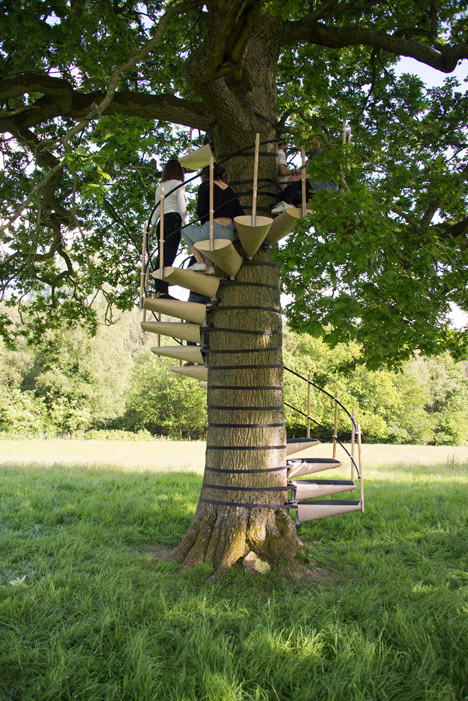 Canopy Stairs are a cool idea I ran across in a tweet from the Hager Group. Designed by a pair of graduates of the Royal College of Art, the stairs create a spiral stair case around the trunk of a living tree without harming the tree.

 The Indiana Department of Environmental Management (