“While exact and precise measures cannot be made, there are estimates that in 2004, 20 percent of households in the U.S. were receiving about 75 percent of their income from the federal government, and that another 20 percent were receiving nearly 40 percent. All in all, about 60 percent of American households were receiving more government benefits and services, measured in dollars, than they were paying back in taxes. President Obama’s first budget alone raises this level of ‘net dependency’ to 70 percent.”
Paul Ryan is in his sixth term as a member of Congress, representing Wisconsin’s First Congressional District. He is ranking member of the House Budget Committee and a senior member of the House Ways and Means Committee. This quote was taken from an article in the February 2010 issue of Imprimis.
This month is National Landscape Architecture Month. April is also African American Women’s Fitness Month, International Cesarean Awareness Month, Emotional Overeaters Awareness Month, Irritable Bowel Syndrome Month & Nationally Sexually Transmitted Diseases Month just to name a few. (From the site here.) I’m promoting Landscape Architecture since I have a Bachelor’s of Science in Landscape Architecture (B.S.L.A.) from Purdue University. I am a Registered Landscape Architect with the State of Indiana. I am a member of the American Society of Landscape Architects (ASLA).
“The president’s budget came out last month, and after reading through hundreds of pages of text and tables, I came to the conclusion that this budget was a lot like the “El Gordo” platter at my favorite Mexican restaurant – it contains something for everybody, it’s loaded with pork, but it’s bad for your health, and it totes a hefty price tag.”
– From March 2010, Econ 101, Dr. Martin Regalia, Senior Vice President and Chief Economist, Economic Policy, U.S. Chamber of Commerce
Becky and I were invited to a meet & greet fundraiser for Jack Jordan at the home of Carol & John Zeglis last week. Carol and John are always wonderful hosts and make everyone welcome. There were a lot of new faces there, but it was still a comfortable setting.
Jack Jordan
Jack and his wife, Hope, were very personable. He has the basic Republican positions, but with a strong “anti-politician” message. One of his issues is term limits and he has promised no more than three terms. I wish I could believe in that… I want to believe in that… It seems though, that those that run for political office quickly become politicians. The number of incumbent politicians that believe in term limits is significantly less than those using that platform plank in their first run for office.
Anyone that knows me is aware of my disdain for Daylight Savings Time (DST). I humbly request that you take my grumblings with a grain of salt the next few weeks as I adjust. I am generally a fan of Benjamin Franklin and like to carry his likeness with me at all times, but when I found out that it was his writing of An Economical Projectin 1784 that fostered DST, my respect for him dropped considerably! Honestly though, he would probably be quite amused that his tongue-in-cheek treatise based on his desire to stay up late and sleep until noon was adopted as international policy!
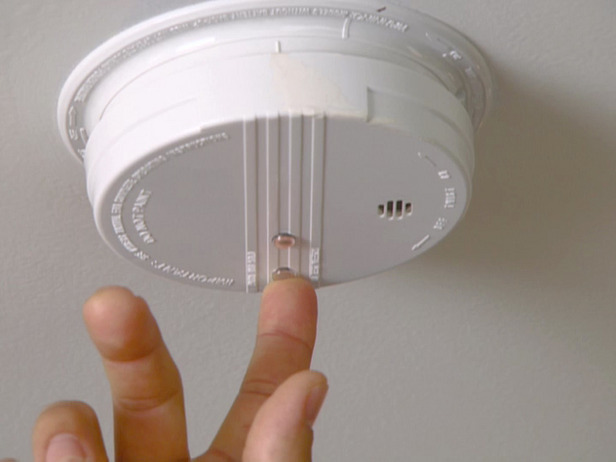
When you change your clocks, check your smoke detectors as well.
So, can we make lemonade from lemons here? The time change is a good time to check your smoke detectors. This is promoted by fire departments across the United States. First, minimally, go around and press the test button to be sure they’re working. Best would be to go ahead and change the batteries. Even the hardwired detectors often have battery back-ups. If the battery died while you were on vacation, you might not have heard that annoying chirp. Also, someone may have robbed the detector of its battery for a use they considered more of an emergency at that time. This is ALWAYS a bad idea! Drag your lazy butt to the store if the TV remote needs a new battery!
Second, review your smoke detector locations. If you have an older home, you may not have smoke detectors located to meet current codes and recommended standards. Check with your local building inspector for code requirements in your area. Check with your insurance company for their minimum standards which could be different. If you are adding smoke detectors, be sure and review the types available. Ionization smoke detectors are the most popular, mainly due to price. These economical units are reliable, but may not detect a slow, smoldering fire quickly. A photoelectic smoke detector uses a beam of light that is refracted when smoke is present. This is generally considered a better detector, but is also more expensive. You can find a well written comparison of the two here.
Third, consider adding carbon monoxide detectors. These devices give you another form of protection against unsafe air conditions.
Fourth, review your escape plan. The lives of you and your family may depend on it. Cool heads are rare in a fire, so make up for this by having an easy to follow plan that everyone in the family knows and understands. There is a good template on developing a fire escape plan here.
Lest you think I’m softening my position on DST, it is recommended that you check your smoke detectors once a year. It would be much better to do this on a once a year holiday such as Valentine’s Day (to protect your lover) or the 4th of July (because fireworks are fire hazards) or Christmas (you have the ladder out to put the star on the tree anyway). DST causes you to change the clocks twice a year, which will undoubtedly lead to confusion for some. But since the firemen have chosen the Spring DST clock change for this, there’s no sense bucking city hall… You’re already late! Check your smoke detectors now.
Ed. Note: Fire Chief Andrew made a good point in the comments: One additional item to mention comes from the NFPA website. “Having a smoke alarm cuts your risk of dying in a fire NEARLY IN HALF. Test yours today”