In doing the previous post on alternate WECS’s (Wind Energy Conversion Systems) I ran across some interesting options for street lights that are powered by wind, solar or a combination of the two. Some are more decorative than functional, but I thought they would be interesting to consider for the Sand Hill Farm project. I’ve collected a list of interesting links below showing some of the innovations that are out there. I’ve also included some pictures gleaned from the net.
E-Turbine image borrowed from alternativeenergyecogreen.blogspot.com
I also was impressed with the idea of the E-Turbine. This bollard size WECS is designed to be installed along roads and take advantage of the constant rush of air caused by passing vehicles. I would imagine these would be extremely efficient in underpasses and tunnels where that energy can be directed to the turbines and then employed to light the surrounding areas. Each Turbine has a built in battery to store the energy produced. This is similar to the idea previously posted here regarding paving tiles that steal the energy created by foot traffic.
With the currently proposed ordinance these may well be banned too. 0.5 Kilowatts (low end of proposed ordinance WECS definition) is 500 Watts. Street lights use bulbs averaging from 35 to 250 watts per hypertextbook.com That means for a fixture using bulbs at the upper end of this scale, each bulb would require its own turbine to stay under the mandated wattage.
Of these, I think I like the UGE version with the banner option and wind/solar combination power. Some of the links above talk about 400 watt bulbs, but assuming there is a battery to charge too, the wattage may well exceed the 0.5 Kilowatt limitation being proposed. The wattage restriction would also limit the option of one turbine powering several lights.
The kind of creative thinking that creates these things won’t be stifled by Culver banning WECS’s. The ban just stops the use of the new technology that’s out there. This is what I tried to suggest at the Plan Commission with limited success.
One of the problems with tile showers is how to handle the drain. It is often difficult to get the water to flow to the low point when dealing with tile. I have seen tile installers get very creative with this – not always with an aesthetically pleasing result though.
California Faucets has come up with the StyleDrain, a decorative shower drain that provides a tile frame that can receive the same tile as the floor. (Shown above and to the right) The perimeter works like a mini trench drain allowing the drain to be much less obtrusive.
While I like this idea and it will help with some installations, I still think I favor the linear drain solution previously discussed here. The linear drain will be a more expensive solution, but it is much more versatile and would work with almost any tile pattern.
A recent post on the SRA Blog talked about the new HepCat Loft Development in Warsaw, Indiana. It’s an interesting concept and one I might consider including in our Sand Hill Farm Development when it moves forward. There is not much in the way of what I would call “loft space” developed as such in Culver. Most of the spaces above the downtown buildings have been developed as more traditional apartments such as what Susie Mahler has created above Cafe Max. (Listing with pictures here.) Jan Nanini’s building at 110 North Main Street took the old Masonic Lodge on the second floor and subdivided it into apartments as well. (You’ll need to go to Jeff Kenney for better history of that building. He tells us it’s haunted here.) Others, such as the space above Fisher & Co. have been left undeveloped and have been relegated to storage.
When I think of “Loft Space” I think of open concept and high ceilings, generally having exposed trusses and often having spiral duct HVAC systems. (I love Google Image search, but it’s frustrating when I look through so many pictures and don’t find exactly what I want. This time I came pretty darn close!) It is very much the look Larry Surrisi went for in the original design of The Edgwater Grille (now The Lakehouse Grille) in Culver. There are more of these spaces in Plymouth. We worked on a loft space at the site of the old Moose Lodge and George Schricker has developed some loft apartments above the former Vine Restaurant as well.
This is very much what RW Kidd Construction has gone for in their concept design; the difference being that instead of rehabbing existing abandoned second floors of buildings, they have used “Loft Space” as a style for their new construction. It is somewhat of a minimalist style that should lend itself to some cost savings. It looks like RW Kidd had outfitted them at a fairly high level though to go along with the HepCat theme, which has reintroduced costs.
I like the flat roof patios. I’m picturing them along the east property line of the Sand Hill Farm Development where they would look out over the baseball diamonds. It could be an interesting concept there. I also like the multifamily format. I think some limited mix of this type of building could fit well in my mixed use scheme. As mentioned above, it would be something different for Culver. I also wonder if it could be modified to work with a more traditional loft theme where there could be some home-based retail on the first floor, possibly moving the garage entrance to the back off of an alley. There’s potential here!
I’m in Warsaw enough that I will need to swing by and see them in person. There are quite a few pictures at the HepCat Loft Development site listed above, so check them out if you’re interested. Let me know what you think. Is this something that could work in Culver?
Thayr Richey (left) and Jennifer Laurent (right) speaking at the Econ 101 presentation at Swan Lake
Thursday afternoon Marshall County Economic Development Corporation (MCEDC) along with Indiana Michigan Power Agency (IMPA) hosted elected officials from Marshall County and the Marshall County municipalities. The venue was the Swan Lake Resort Conference Center. The speaker was Thayr Richey of Strategic Development Group (SDG).Twenty-five county and municipal representatives along with most of the MCEDC board attended the presentation; a pretty good cross section of the county including Bill Githens, Ralph Winters, Barbara Winters, Jim Falkner, Margaret Dehne and Dave Schoeff representing Culver. Hopefully everyone took something back to their respective communities to share and act on. Mr. Richey spoke of Economic Development as a team sport. It’s not something that can be done by a single person. The communities need to pull together to make something happen in Marshall County, much as Marshall County needs to work with our neighboring counties to elevate our region.
Thayr Richey
Mr. Richey discussed Economic Development as a concept and how it has changed over the past 30 years with the advent of additional technology and the increasing globalism of our economy. There are now over 100 local economic development offices (LEDO’s) in the State of Indiana. He allowed Jennifer Laurent, MCEDC’s Executive Director, to speak on the specifics of what MCEDC is doing to promote Marshall County locally, regionally and nationally. He then assessed those functions and how they related to the board and commission members in attendance. It was good to hear that we are, for the most part, on the right track.
In discussions about site selectors, Mr. Richey told how it has almost become a game of speed dating for the LEDO’s. You have a very limited time to make a good first impression, exchange telephone numbers and leave some kind of hook that might get you a date in the future. Ms. Laurent told of a recent meeting she attended in Indianapolis where members of the Site Selectors Guild were present. She said the analogy was a good one and it was a great opportunity to connect and get a feel for their individual styles. She said she felt like she came away with positive connections to seven site selectors that were attending the event.
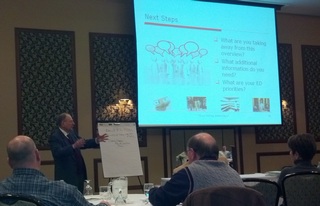
Dealing with new business prospects is like a game of Musical Chairs…
One of the important thing that I hope our representatives took away was the extreme competition that is out there. We have to have a viable product to sell and we have to have all the pertinent information available to supply a prospect within days. He went through the 200 point request for information (RFI) that Ms. Laurent receives on a regular basis, usually with a 24 or 48 hour deadline for turn-around. One of the things that often drops us from a prospects list is the lack of interstate highway access. “The new goal is ’55 in 5′; Companies want their trucks up to speed at 55 mph within 5 miles of their facility when they’re shipping product,” said Richey, adding, “Dealing with new business prospects and RFI’s is like a game of Musical Chairs. Your economic development people are striving to stay relevant and make it to the next round, while the site selector is looking for reasons to eliminate them and get the potential number of sites down to manageable size.”
We discussed the ways we have of overcoming items such as the interstate request and Ms. Laurent said we have made progress with the Indiana Economic Development Corporation (IEDC) to make sure that we were not eliminated from initial searches for that. The advent of the Internet and the ease that searches can be done online has made MCEDC’s job increasingly difficult since we are often eliminated before we even know we were being considered. Prompted by a question from the audience, Ms. Laurent also told a little about our efforts to form a “U.S. 30 Coalition” with the objective of preserving U.S. 30 as a thoroughfare and controlling the addition of stop lights. MCEDC as well as other local LEDO’s are in discussions with the group that spearheaded the U.S. 31 Coalition to be our advocates.
Since Plymouth is currently updating their Comprehensive Plan and Culver is is the process of selecting a consultant to help update their Comprehensive Plan (A previous post about Culver’s Comprehensive Plan efforts is here.), I asked where and how economic development should fit in. Mr. Richey said that the input of our LEDO is critical to this planning. They can provide input into what tools they need to encourage development and they can make sure that the language in the plan dovetails into the LEDO’s marketing plan. This is very much a case where MCEDC needs something to market. The Comprehensive Plan should show that willingness and vision for growth. It was emphasized several times that the current manufacturing standard of “just in time” delivery applies to site and building acquisition. Expanding companies want properties that are “shovel ready” and each have their own interpretation of what that means. Even better, they like to see a building that meets their needs and is ready to move into. (MCEDC is currently working with the Plymouth Redevelopment Commission to put up a shell building as part of their marketing effort. Discussed in the ECC blog here and on WTCA’s site here.)
Wrapping up the session, Mr. Thayer discussed the use of Tax Abatements and Tax Incremental Financing (TIF) as the two tools the State of Indiana has given Marshall County to assist with economic development. The allowances on Tax Abatements have changed where a municipality is able to give a 100% tax abatement for up to 10 years. The municipality has the option of adding “claw back” provisions, giving abatements for less time or a lower percentage, but the developer is always going to ask for the maximum. This could be one of the things that pulls your chair. (Back to the Musical Chairs reference.) TIF Districts are being used by several of Marshall County’s communities to varying degrees of success. He gave several tips on how they could be and should be used as well as common mistakes make by the governing bodies that used them.
All in all the presentation was informative and I think it was helpful in generating discussion amongst our County and municipal representatives. I was pleased with those that made the effort to attend.
It seems appropriate that I give a little rebuttal to the story I reprinted last week on historic windows (here). I’m a supporter of Indiana Landmarks. I can’t argue that preserving old windows is a green solution. Keeping them out of landfills is just one example of this. Unfortunately there are other issues.
It’s worth noting that Daniel tested old windows with storm windows installed. Many older windows don’t have storm windows and some that do have storm windows that fit poorly. It’s also worth noting that he was testing glass to glass. I think he’s right that the extra air space between the inside window glass and the storm window glass made a difference. Most of the new window manufacturers will tell you the same thing.
But a window is an assembly, not just the glass. Daniel might have gotten different results if he had tested around the perimeter. New windows have thermal blocks to prevent heat transfer which old windows do not. He might have gotten different results if he had tested around the outside of the trim. New windows don’t have ballasts or their associated cavities in the walls. When we install new windows we fill those voids with insulation which is nearly impossible to do with a window in place in a finished wall.
And one more thing about storm windows… They generally come down in the Spring and don’t go back up until Fall so we can enjoy the fresh air. Heat transfer is just as important in the heat of the summer when the air conditioner is running.
Old Window with cracking Lead Paint
Another big issue with old windows is lead paint. I attended a lead safety course and they emphasized that old windows with lead paint were a prime producer of lead dust. The old double hung windows are often painted on the sides of the sash as well as in the window frame track. Friction across these painted surfaces as the windows are raised and lowered produce lead dust which is easily inhaled, absorbed or ingested if it gets near food. Stripping an old window such as the one in the picture to the right is a time consuming and expensive process, particularly when lead safety practices are observed.Window location is also important. New building standards require tempered glass when glass is installed less than 18″ above the floor or adjacent to stairs. Older windows are exempt from this requirement, but that doesn’t make the safety issue that caused the rule to be promulgated go away.
There is also the issue of seals. We’ve all seen old double hung windows with foam stuffed into the joint between the sashes to prevent air infiltration. New double hung windows have seals at those cross points. Even with those, they can’t compare with new casement windows that have the locking mechanism that pulls the sash tight against the seal.
All in all, there are some benefits to salvaging old windows. New windows never provide the same look or have the authentic trim. Often it is cost prohibitive to install new windows with true divided lights. There are many reasons to preserve historic windows. It’s important to understand all the cons that go along with the pros though.



.jpg)




 California Faucets has come up with the
  A recent post on the
  When I think of “Loft Space” I think of open concept and high ceilings, generally having exposed trusses and often having spiral duct HVAC systems. (I love Google Image search, but it’s frustrating when I look through so many pictures and don’t find exactly what I want. This time I came pretty darn close!) It is very much the look Larry Surrisi went for in the original design of
 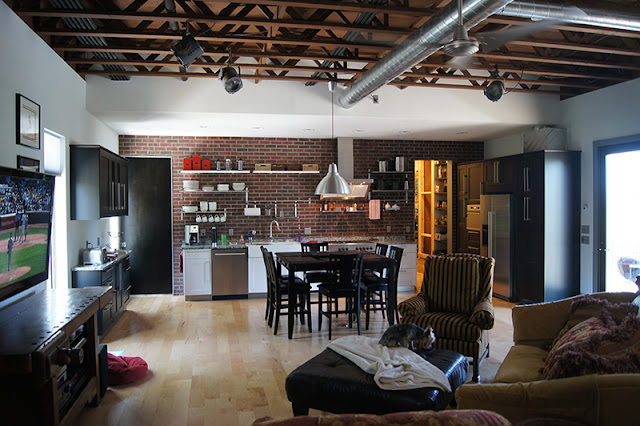 This is very much what
 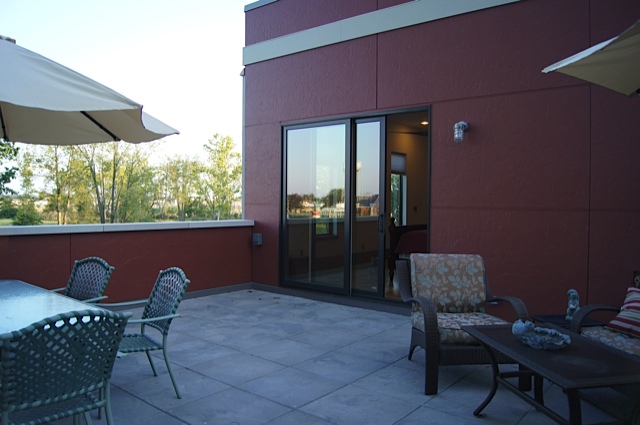 I like the flat roof patios. I’m picturing them along the east property line of the Sand Hill Farm Development where they would look out over the baseball diamonds. It could be an interesting concept there. I also like the multifamily format. I think some limited mix of this type of building could fit well in my mixed use scheme. As mentioned above, it would be something different for Culver. I also wonder if it could be modified to work with a more traditional loft theme where there could be some home-based retail on the first floor, possibly moving the garage entrance to the back off of an alley. There’s potential here!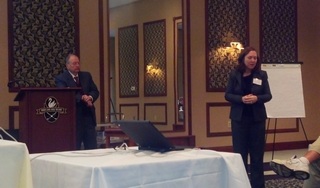



 It seems appropriate that I give a little rebuttal to the story I reprinted last week on historic windows (