LaPaz Commons Ribbon Cutting

On Thursday, May 23rd, we had the Ribbon Cutting for Riverside Commons Apartments in Plymouth and LaPaz Commons Apartments in LaPaz. This project resulted from Marshall County Crossroads‘ Stellar Designation.

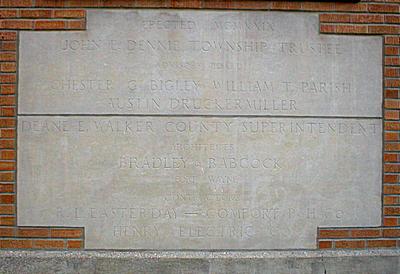
In LaPaz, Matthew Celmer spoke on behalf of the Crossroads committee. Gary Neidig spoke on behalf of One Marshall County, the new reiteration of Crossroads. Roger Ecker, LaPaz Town Council President, spoke on behalf of the Town of LaPaz. Alan Rakowski, Director of Real Estate Acquisition, for IHCDA spoke as well. It was also nice to see Council member, Ryan Young; Clerk Treasurer, Jenn Gilmer; Former Clerk Treasurer, Lorraine Dove; and some of the town employees there as well. All of them praised the new development and the what it would do for the Town of LaPaz. (Marty Oosterbaan was there as a former Crossroads’ leader. He was also responsible for a lot of help in pulling the Ribbon Cutting together.) Thanks also to Easterday Construction Co., Inc. Project Superintendent, Bob Cooper, and Office Manager, Julie Heise for their help throughout the project and at the Ribbon Cutting. Thank you to Gavin Greer for his coverage in the Pilot News on May 29th.

When we have a project like this, I try and attend all of the local town council meetings. I hit most of them and the council made me a standing agenda item. My time there helped me understand the struggles LaPaz is going through and the good people that are involved in the town’s government, contributing their efforts. This made it all the more significant that LaPaz stepped up to help make this project happen, understanding their tight budget. LaPaz punched above their weight, providing more assistance than we received for Riverside Commons in Plymouth and for The Paddocks in Culver.

The LaPaz Council helped find a suitable site and made initial contacts with the owner. They also obtained an appraisal for the property.

The site required a variance. LaPaz Council President, Roger Ecker, appeared with us before the Marshall County BZA and spoke in favor of the variance request. (That was a late night and much appreciated!)

Troyer Street was not much more than a cow path before this project. The town provided and installed stone where the “street” had become a mud hole. Later, the town was able to grade and stone the remainder of the street in-house and then applied for Community Crossings funds to pave it and provide storm water infrastructure. This didn’t just benefit LaPaz Commons, but since these improvements, there has been steady traffic from the other apartments to the east. This was a great improvement for LaPaz.

LaPaz also waived tap fees for the sewer hook-up. A small thing, but helpful to project costs.

And as a final gesture of support, the LaPaz Council provided a picnic lunch at the Ribbon Cutting. That was a touching gesture!

Alan Rakowski, Director of Real Estate Acquisition, for IHCDA 

LaPaz and Plymouth were the only communities that stepped up to the challenge for this project. We approached Argos, Bremen and Bourbon (Culver was not eligible), but they either did not have a site available or wanted terms that didn’t fit the IHCDA application. It took courage and a lot of effort for LaPaz to do this and they should be commended. As Alan Rakowski from IHCDA stated in his speech, including LaPaz strengthened the overall application and probably made the difference in it being awarded. I also think that including these projects made a difference in Marshall County Crossroads receiving the Stellar designation and all the ancillary that came from that.

LaPaz Commons is an eight unit townhome project. There are 6 townhouse units and two ADA accessible flats. All of the units are ADA visitable. Before we were even done with construction, there were 10 applications for the units and at the Ribbon Cutting, there were four units filled. This is the first new housing in LaPaz since we did the LaPaz Garden Court senior housing in 2010.

LaPaz has suffered with the Highway 31 bypass literally bypassing them. They are working hard to keep their community thriving, using the limited resources which they have. We are happy that we could make a dent in this and provide some much needed housing. Fingers crossed that this helps kickstart some other positive additions for LaPaz!

An Odd Juxtaposition this Week

Riverside Commons – Plymouth Ribbon Cutting in the Pilot News, Friday, May 24, 2024

On Thursday we had the Ribbon Cutting for Riverside Commons Apartments in Plymouth and LaPaz Commons Apartments in LaPaz. This project resulted from Marshall County Crossroads‘ Stellar Designation. Matthew Celmer spoke on behalf of the Crossroads committee. Gary Neidig spoke on behalf of One Marshall County, the new reiteration of Crossroads. Mayor Listenberger spoke on behalf of the City of Plymouth. Alan Rakowski, Director of Real Estate Acquisition, for IHCDA spoke as well. It was also nice to see Don Ecker there representing the Plymouth Common Council, Lynn Gorski, Clerk Treasurer, representing the Plymouth Clerks’ office and Ralph Booker representing the Plymouth Plan Commission. All of them praised the new development and the what it would do for the City of Plymouth. (Marty Oosterbaan was there as a former Crossroads’ leader. He was also responsible for a lot of help in pulling the Ribbon Cutting together.) Thanks also to Easterday Construction Co., Inc. Project Superintendent, Bob Cooper, and Office Manager, Julie Heise for their help throughout the project and at the Ribbon Cutting.

The juxtaposition occurred later that day when a letter began circulating around Plymouth, on Facebook, and in other venues, condemning the Mayor and others such as myself involved with the proposed GC Horizons project – a project very similar to Riverside Commons. That was followed by a negative Letter to the Editor in the Pilot News. It was odd, being praised for doing something good for the community at the Ribbon Cutting and then later the same day, being attacked on Facebook for wanting to do more of the same.

Serenity Place – Picture from Darren Demis

Riverside Commons and the proposed GC Horizons are both IHCDA RHTC (Rental Housing Tax Credit) projects. The only difference is that GC Horizons will include 8 PSH (Permanent Supportive Housing) units similar to those at Serenity Place – 8 of the 34 total units. The “GC” in GC Horizons stands for Garden Court. Garden Count has been a respected not-for-profit entity providing affordable housing to the community for decades. They were also denigrated for attempting to do more good in the community.

While I know it’s unwise to feed the trolls by attempting to rebut their falsehoods online, I thought it worthwhile to present some of the facts here:

  • Garden Court is a true not-for-profit (NFP). Their board is totally volunteers and they recruit board members from all of the communities that have Garden Court facilities in them. The board members receive no compensation for their participation. Maybe it’s not their official mission statement, but from my association with them, there mission is to provide clean, safe housing for underserved populations in Plymouth and the surrounding area. (They haven’t even invested in a website! More about them pops up from our website than anywhere else.)
  • Garden Court is the best landlord/property owner with which we have worked. Because they are a NFP, their bottom line is to cover expenses. They have no employees or shareholders to compensate. That lets them put all the money to work for the best facility possible.
  • Garden Court requires their management team to vet applicants and residents. They do no allow applicants that fail their strict criteria to become residents. Their facilities are well maintained and I have experienced a sense of pride and ownership in their residents.
  • Garden Court was invited to the IHDCA Housing Institute for several reasons: One being their past work in Plymouth with Serenity Place and another being IHCDA’s recognition of the need in Plymouth. This opportunity was designated for Plymouth, not for other Marshall County communities.
  • Serenity Place experienced some issues in the first six months of operation that resulted in police calls. Once an equilibrium was established and some of the trouble makers were removed, those police calls tapered off. There was a learning curve for both new residents and management. This has not been a continuing problem.
  • GC Horizons will receive tax credit funding through IHCDA, but it is not a tax exempt project. Sales tax is required on the construction. Property taxes will be assessed and collected on the property at some point.
  • GC Horizons will not draw its tenants from outside Marshall County. The list of deserving and qualified applicants in Plymouth and Marshall County will be the pool from which they draw. There is a long list…
  • GC Horizons would love to move some of the north side motel residents into their facilities! The ones that meet the application standards and are looking to improve their situation… It’s unfortunate that there are bad apples in the motels, but there are also good people deserving a chance at better living conditions and the hope of getting on their feet and changing their lot in life.
  • GC Horizons has no ability or desire to circumvent laws, restraining orders or other legal devices that protect schools from past offenders.
  • GC Horizons is not a Mayor Listenberger project. The community team that began this journey at the IHCDA institute was formed a couple of years ago. The former City Attorney was part of that team because the previous administration recognized the community need. Mayor Listenberger’s support is a continuation of that recognition of need.

There were other specious Facebook comments that were just mean spirited and unworthy of responses. Few of them suggested alternate solutions, though at least one’s solution advocated violence and destruction of property. The negativity is hard to shake off. That said, one thing stood out from the Riverside Commons Ribbon Cutting on Thursday… We had a two story townhouse unit open after the ribbon cutting for guests to tour. Everyone was complimentary. As I was walking out with a couple of guests, there were two women sitting and talking on a neighboring porch. One of the women asked if we liked the unit? She then asked if we would like to see one of the flats, since she lived in a flat. I smiled and thanked her, saying I was familiar since I was part of the construction team. She smiled broadly and proceeded to tell me how happy she was with her new apartment, how she had made new friends there and how there was a sense of community. She ended it saying thank you for making the apartments available to her. She is one of the reasons for doing this and her heartfelt, unsolicited gratitude helps as some of the negativity comes my way.

The Dunes Work Session

There was a work session held Wednesday evening, 5/15/24, to discuss The Dunes project. This was a combined session with the Culver Town Council, Plan Commission and Redevelopment Commission in attendance. Despite being advertised as a work session, they did allow limited questions from the public in attendance. I am not sure how many were watching via Teams, but there were only 7 “public” in the room.

Combined Work Session for the Culver Town Council, Plan Commission and Redevelopment Commission May 15,2024

I attended just to listen. As I have said before, I am generally in favor of this project, but The Devil is in the Details. This is the third project of this type, one of two that has regional matching dollars, that has been come up for the Town in the last 10 years. It’s been interesting to see how these things have morphed over time. Since the meeting, I have been approached by several people, some on opposite sides of the issue, for my thoughts on the meeting. I thought I would include some of my responses to them here.

The meeting was ostensibly to hear the Town’s Engineering Firm, Midwest Engineers, Inc., give their assessment of the drainage plans. Some of what was presented was by the developer’s attorney though, so there may have been some honest miscommunication. That said, it wasn’t corrected by the engineer. As a disclaimer here, I have not seen the drainage study, final plat, or construction plans, so I can only speak to what was presented.

Thoughts on the drainage:

  • There was a question from a plan commission member concerning the adjacent wetlands behind the water treatment plant which currently comes up into adjacent property owners’ yards during heavy rains. The response was that there would be no increase in water volume entering the wetlands, but that it would enter faster. There would be an overflow established for the wetlands routing the water somewhere (town storm drains?). This is one of those where I wonder if there was a misstatement, as the general design of a detention basin is to detain the water and slowly release it at a rate no faster than predevelopment. Flushing the wetlands with a rapid release and an overflow to the storm drain could well be detrimental. This wetland is directly adjacent to the town’s well field, so its health is important. Also, this seems counter to town’s storm water requirements which state, “It is the responsibility of each land owner to insure that any portion of precipitation from such sources as rainfall, snowmelt, or irrigation water that flows over the ground surface be contained within their lot or channeled to an appropriate storm sewer, ditch, or stream.” – Chapter 6, Section 250, page 115. This is tricky. It’s important the the wetlands still receives the pre-development runoff (contrary to the ordinance), but does not get flushed with a rapid release of runoff.
  • There was a discussion about making the pond deeper. Deeper will increase the volume held, but won’t necessarily increase the rate of absorption, which they stated they are counting on. The depth in comparison to the wetlands is important and the plantings and maintenance of this detention pond is critical, else the bottom seal and no longer provide absorption. I trust that Midwestern Engineers is considering the possibility of multiple 100 yr storms and the possibility of 500 year storms, since their occurrence is a possibility.
  • There were questions about the start of earthwork before Culver approvals. It was stated that they didn’t require any Culver approvals and they had the State approvals required for this work. It wasn’t clear if they had obtained an erosion control permit from Culver. I believe that should have been required and applied where it might be stricter than the State. – Chapter 6, Section 050, H, page 87
  • There was discussion of possibly adding large drywells. Drywells are generally pervious vessels such as manholes, vaults and oversized pipes which detain some of the water and allow for absorption into the surrounding soil. They work well when they are maintained, but cease to work if they are allowed to clog. They only work in suitable soils. The addition of drywells would move this maintenance from the HOA (responsible for the detention pond) to the town, as they would become part of the built storm system, dedicated to the town with the streets. A potential alternate solution would be the creation of small drywells associated with the downspouts on buildings and the creation of rain gardens and/or bioswales to slow water flow and increase absorption.
Minimum Lot Area Chart for Culver’s R-2 District

Thoughts on size:

  • There was audience pushback on the size of the development. The concern being that the addition of “300 doors” (the developer’s term), will cause traffic problems, tax the municipal systems and generally be disruptive to Culver as we know it. I tend to trust the numbers provide by town officials on this. We have been assured that the sewer and water capacity is not only adequate, but there will remain excess capacity for other future projects. Town officials have also cited demographic numbers showing that if all of these new units are filled with fulltime residents, that will only bring our number of fulltime residents back to the mix of the 1980’s. I am most interested in the utility capacity, as I would hate to see us with limited capacity if something comes up we really want. As mentioned in this post, Culver Meadows is still hanging out there as well.
  • There was audience pushback on the the “surprise” involved with this development. The land involved was annexed in the 2010’s to promote its development. The R-2 zoning district was rewritten in the 2010’s to allow greater density. Finding ways to add housing to Culver has been a goal for decades at this point. It’s hard to justify the pushback when it’s been in the plans for that long and came up again as a major goal in the current comprehensive plan. There is some question of the development size. It was stated as 60 acres in the meeting, but the parcels on the GIS add up to 65 acres. (Are the roads being discounted?) Either way, worst case scenario, if all 300 doors were counted as single family residences, then 300 units x 7,500 sf (from R-2 Lot area chart) = 51.65 acres. They are well under the density allowed. The only question here is the division of lots and whether each of the proposed lots stays below the density standard. I am guessing they’re safe on this.

Thoughts on traffic:

  • There were audience concerns about the added traffic in the downtown and the desire to reroute this development’s traffic out of town. I was pleased to hear that the downtown merchants had been surveyed and they were in favor of the additional traffic downtown. They see this as a benefit to them. As I previously wrote in this post, I think development around the perimeter of Culver should be directed in and efforts should be made to make new residents part of the community, rather than creating our small version of Suburban Sprawl.
  • The financing was discussed and the additional funds coming to Culver through the TIF can be used to address infrastructure issues that may come up from this. This is one I do take some exception to. I am not privy to current plans and negotiations, but I am concerned that street improvements may require additional right-of-ways as discussed in this post. Even if these aren’t required for The Dunes, there was discussion of the development occurring further south on Tamarack Road and 19th Road. If this is an area of expansion, provisions for improvements should be obtained from this developer now. There would be little effect on their project, but could make a huge difference in addressing future needs. I fully understand the town’s position, i.e. they don’t know what might be needed until the problems arise, but having additional right-of-way now would prevent eminent domain problems in the future. As discussed in multiple comprehensive plan meetings, municipalities need to do their best to plan for 50 to 100 years from now and not do things that can’t be easily rectified in the future.
  • Under things not discussed, but I thought should have been… I still have concerns that the new street across South Main Street from Tampa Street does not line up with Tampa Street. I think this is creating a dangerous intersection. I also think this is the time to address the Davis Street/South Main Street intersection. On that issue, there is scuttlebutt that a possible solution is to end Ohio Street as a cul-de-sac. That should be part of this discussion now, as well.

Thoughts on costs:

  • There were questions on what this will cost Culver Taxpayers. I trust the town officials that they have negotiated this so there are no out of pocket costs to the current taxpayers and that the additional captured tax funds will be adequate to fix any problems and provide excess for other things beneficial to Culver. My only concern here is whether that will be burnt up addressing the infrastructure issues posed above.
  • Under things not discussed, but I thought should have been… In the previous development agreements mentioned above, there were more requirements put on the developer. When Culver put money toward the street construction, the naming of the street was by the town, not the developer. The other two agreements included requirements for part of the developments to have housing cost controls. The Dunes developer is receiving $1.3MM in READI funds as well as TIF bond funds from the Town. The Dunes developer has been very upfront in meetings that this project is not affordable housing. It is market rate housing. While the town (rightly in my opinion) believes that additional housing availability should have the effect of lowering overall housing costs, there is a question as to whether the developer will proceed with later phases of this development if that happens. If increased capacity lowers demand, the premium available for new housing may be lower as well. I do not foresee this, but it should be part of the discussion. Lowering housing costs is a double edged sword for current residents as well. While many of them balk at the tax increases associated with the rise in assessed value, they are pleased with the appreciation in value when they sell.

These are the main points and I think I will leave it here. If something else comes up, that I think should be mentioned, I may make some edits.

Vast Wasteland

I was fortunate enough to be invited to the 50th anniversary celebration of PBS station WNIT Friday evening. There was an interesting mix of patrons and board members. I did my best Mr. Rogers impression and there were others emulating their favorite characters from shows like Downton Abbey. Elmo and Cookie Monster made appearances as well as one Miss Piggy!

Several times Newton Minow was quoted. Minow laid down his famous challenge to TV executives on May 9, 1961, in a speech to the National Association of Broadcasters, urging them to sit down and watch their station for a full day, “without a book, magazine, newspaper, profit-and-loss sheet or rating book to distract you.” “I can assure you that you will observe a vast wasteland,” he told them. “You will see a procession of game shows, formula comedies about totally unbelievable families, blood and thunder, mayhem, violence, sadism, murder, Western bad men, Western good men, private eyes, gangsters, more violence and cartoons. And, endlessly, commercials — many screaming, cajoling and offending.” – PBS News Hour

Cookie, Bozo, Garfield Goose and Frazier Thomas from Wikipedia

in those early days of television, there were only the big three with the occasional local independent stations scattered in. (I grew up able to catch WGN out of Chicago on a good day, so Bozo’s Circus with Bob Bell and Frazier Thomas was in my viewing rotation along with Garfield Goose and the Roller Derby.) Mr. Minow was no doubt chagrined that while his admonishment took root in some areas, including the creation of PBS, in other ways the vast wasteland just grew vaster…

It was interesting to hear the discussion of PBS’s future, both nationally and locally. There is no doubt that they have a lot of quality programming, but with the choices available, how do they compete? There are stations that appear to have been created to directly challenge them, such as Discovery and TLC (The Learning Channel), but they have slipped into more salacious fair, i.e. “Naked and Afraid” (XL!) and “Dr. Pimple Popper“. How does a local station like WNIT compete?

The interesting quandary is how to produce local content that might be saleable to a larger audience. For example, this weekend I watched part of a local WNIT documentary, “A Legacy Of Memories: Silver Beach Amusement Park“. It’s one that I have watched (parts) before and found it interesting. But that interest was because it’s this area’s history. Would I have watched a similar program about a similar subject in New Jersey? Maybe. Probably not though. So how does this become marketable? I know this was not as expensive to make as one of Ken Burns‘ documentaries, but there is still a significant expense. If there’s no way to recoup that from licensing to other broadcasters, can they afford to do that on a long term basis?

There were a lot of smart people in the room Friday. That bodes well for finding solutions to these quandaries. PBS doesn’t look like it did 50 years ago when WNIT started out with a single channel without 24 hour transmission. Today it has 5 channels, all with 24 hours of content. Who knows what the next 50 years will bring, but there’s no doubt they’re still stiving to make a dent in Newt’s vast wasteland.