
 Culver’s Entry Level Housing Committee met again last night. It is apparent that everyone isn’t on board yet. I’m a bit frustrated that we’re treading over ground previously covered. The group decided not to make any commitments to the developer that is interested and further decided to try again to open discussions with property owners that have not participated to date. With the deadline fast approaching for a grant application, I don’t see this happening this year. It’s unfortunate, but there are diminishing returns when you try and push a rope. I guess I will just tie a knot in the end and hold on…
Affordable Housing
Entry Level Housing Sample
Earlier this month Bill Hollingsworth, an Affordable Housing Developer, made a presentation to some of the key leaders involved in Culver’s Entry Level Housing Task Force. The presentation was a combination of education for the Task Force members as well as an introduction to his company and the work he has completed in this arena. He is currently working on a building rehabilitation project for an artist enclave which he was able to fit under the Affordable Housing umbrella.
As part of his presentation, he included some pictures of a new construction Affordable Housing project. I thought I would share those pictures here. The Affordable Housing moniker has some negative connotations. This helped dispel that concern with the task force.


The Sand Hill Farm property is under consideration for this project. It would require a PUD zoning in order to complete a project similar to what is shown here, but I think it would be a welcome addition to Culver’s housing stock. At this point Mr. Holllingsworth has made an initial contact and has shown interest in pursuing this project. The task force is hoping to leverage this into additional market based housing as well.
Affordable Housing Task Force
 The Affordable Housing Task Force met on Monday the 27th to discuss the information Jonathan Leist, Culver Town Manager, had assembled through various meetings. I attended four of the six meetings he reported on and was able to help fill in background. In a nutshell, there are opportunities and developers that can be enticed to do work.
In a MCEDC site visit with Elkay, we were able to recruit Elkay’s management to assist us in our endeavors. Two Elkay representatives attended the Monday meeting and brought demographics for our use. They also volunteered to help with surveying to determine how many Elkay employees would be interested in relocating to Culver if housing were made available.
In the meeting with IHCDA, we learned that funds are available, but only for income based housing projects, not market based housing. We did find that much of the projected income based rental rates are actually above the local market rate rents.
The Task Force agreed that it would be prudent to pursue both market based and income based housing to keep our options open. The group tasked Jonathan to take a couple of things before the Town Council: 1) A budget for a Needs Assessment Survey and 2) A tentative agreement to consider tax abatement for the properties. (Tax Abatement was requested by all of the developers Jonathan met.) Jonathan accomplished #2 at last night’s Council meeting, but #1 was not approved as it would require an additional appropriation for the unbudgeted cost.
Image Source: www.homeloanstoday.com
Marshall County Entry Level Housing Meeting
 I sit on the Affordable Housing Task Force for Culver and as part of that as well as wearing my MCEDC hat, I sat in on a meeting at the Culver Library with Darin Edwards, Underwriting and Closing Manager for IHCDA. The meeting was arranged by Jerry Chavez, MCEDC Executive Director, and included representatives from the Marshall County communities of Culver, Argos, Plymouth and Bremen.
Smaller Home Sizes
My post regarding Starter Home Barriers sparked some conversation about the square footage of a starter home, particularly regarding the 2,000 minimum home size discussed in the Builder magazine article. Many of the points about that possibly being unrealistically large for Culver were valid. Since I was paraphrasing the article in the previous quote, it seemed appropriate to stick with their numbers and rationales.

In any case, the discussion prompted me to do a little further research into smaller home sizes. I did find the Zero Energy Design website which included several smaller residential footprints ranging from a 1 bedroom/1 bathroom at 624sf to a 3 bedroom/2 bathroom at 1120sf. (Apparently in a ZED home no one watches TV as they don’t even appear to allow a place for one in their room furniture layout.) While I know the boxy design is the most efficient, I would hope we can be a little more creative in our floor plans.
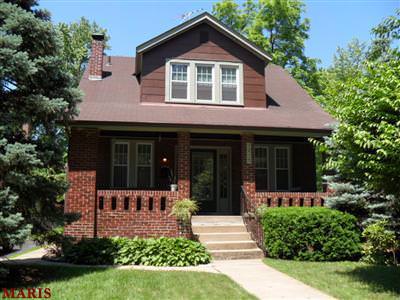
I also notice that almost all the small footprint homes are single story. I don’t know if that’s because they are often geared towards the elderly and are trying to make them as accessible as possible or if there is just a predisposition to single story now. Going back to a story-and-a-half design could provide some additional efficient space. The boxy design lends itself well to prefabricated construction, but we have had good success with panelized construction which is also efficient where duplication of layouts is possible.
I think the infrastructure issues will be more telling than the house floor plan in what the end selling or renting point is. As with their square foot home size, I think the lot buildout may be more economical here, but probably not by much. Many of the same regulations apply and our Comp Plan pushes more measures such as “complete streets” which add costs.