Net Zero Energy Walgreens in Evanston, Illinois

Imager borrowed from evanston.patch.com

Combining efficient energy use with wind and solar energy production, the new Evanston Walgreens will have net zero energy use.  See the article here.

Too bad the new WECS ordinance being considered for Culver would stop a store like this from coming into Culver.  (A Walgreens would best fit in a C-2 Zoning District which does allow for the use of  a WECS, but the further restriction that no WECS maybe located within 1500 feet of an R-1 Zoning District would make it virtually impossible to place such a store within Culver’s Town Limits.)

Evanston is north of Chicago which generally would put it in a latitude where solar energy collection has diminished returns.  It’s proximity to Lake Michigan does make it likely to receive fairly consistent winds.

Read more

Telkonet Thermostat

Telkonet Thermostat Image borrowed from www.eregrinegroup.com

Check out the Telkonet thermostat.  I’ve previously written about the Nest thermostat and the Honeywell Wi-Fi thermostat.  Telkonet claims to take it another step further.  Not only is their thermostat programmable, accessible from the Internet and “smart”, but it can calculate roof comfort by aggregating data like time-of-day, solar load, brightness, humidity and occupancy patterns.  It’s Ecoinsight feature determines when a space is occupied or vacant and reverts to preset temperature limits.  Check it out at their site here.

The Ecoinsight thermostat is more for commercial applications than the other two.  While it has Internet connectivity, it may require special networking in order to access it.  This is more efficient where you have multiple installations.

Read more

Double Duty Light Fixture

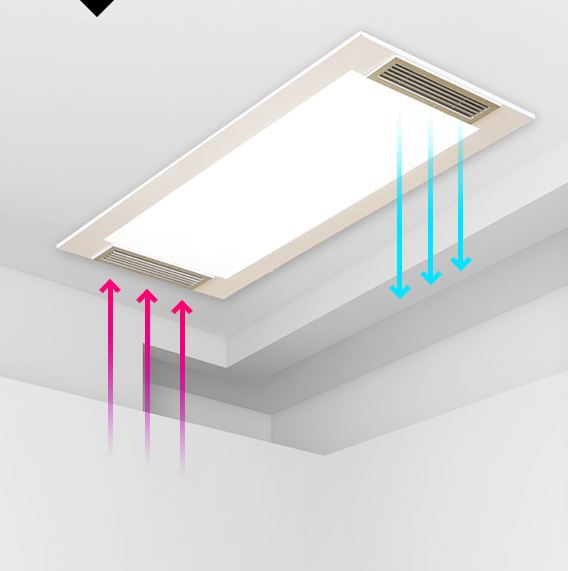
Arcalux HRMS  Image borrowed from American Green Technology website
Arcalux HRMS
Image borrowed from American Green Technology website

American Green Technology has a light fixture that does double duty as an air purifier.  From their website:

“Hospital-borne infections are a leading concern for medical professionals and patients. According to the Centers for Disease Control and Prevention, 5 to 10 percent of all patients contract at least one hospital-acquired infection during their stay in an acute-care hospital. There are indications that the future of surgery as we know it may be affected because of uncertainties and fears of post-operative infections.  The CDC estimates that 1.7 million hospital-associated infections (HAI’s), from all types of bacteria combined, cause or contribute to 99,000 deaths each year and is now the fourth leading cause of death in the United States, greater than Breast Cancer, Aids and Automobile Accidents combined.”

Isn’t that depressing!  That makes me feel good about my next hospital visit!

Read more

Self-Assembling Robots

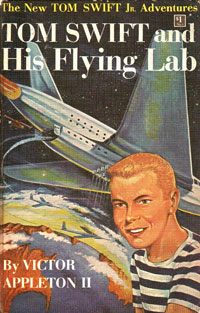
I’ve been a fan of Science Fiction since Grandma Berger gave me a Tom Swift Jr. book in grade school.  I think it was an impulse purchase on her part as I can’t imagine her as a sci-fi fan.  That first Tom Swift book was an old book when I read it.  Part of the fascination with it was reading what the book presented as fantasy juxtaposed against those same things coming to life in the real world in which I was living.  In any case, I was hooked.

It seems to me that most scientists would be fans of science fiction as well.  Look at Sheldon, Leonard, Raj & Howard on the Big Bang Theory…  Ha!  But on the more sober side, do you think scientists ever think about the cautionary science fiction tales as they strive to bring those fantasies to life?

This article by Judy Schriener titled “Will Self-Assembling Robots Slide into the Construction Industry?” makes me wonder.  Isaac Asimov first presented The Three Laws of Robots in a 1942 short story titled, “Run Around”.  Some of you may be familiar with them from the recent Will Smith movie version of another of Asimov’s books, “I, Robot”.  For those of you unfamiliar, here they are in their original form:

  1. A robot may not injure a human being or, through inaction, allow a human being to come to harm.
  2. A robot must obey the orders given to it by human beings, except where such orders would conflict with the First Law.
  3. A robot must protect its own existence as long as such protection does not conflict with the First or Second Law.

* Laws and timelines taken from a wikipedia article title Three Laws of Robotics.

Read more