
I generally feel that upgrading electrical fixtures and devices to the newer energy-saving devices is the easiest green energy to justify. Great strides are being made in this area to the point that my average client can see savings with a short pay off time. This is often something that shows gains with a one-to-one swap of new for existing fixtures. Further gains can be achieved by designing around the new fixtures and adding energy-saving controls.
One of my supplier reps was in yesterday and shared the following analysis that he completed for one of his manufacturing clients who was considering upgrading their existing exterior wall pack lights from HID (High Intensity Discharge such as High Pressure Sodium or Metal Halide) to LED (Light Emitting Diode):
These are the wall pack security fixtures you see high on the wall around factories, warehouses or buildings with parking near their wall.
Fixture prices:
HID TWH400MTB w/lamp $218
LED TWHLED 30C 50K $450
At $0.08 energy rate, 10 hour/day, 365 days/year the energy savings is $102.79/year.
LED = In a ten year time frame you would spend $450 for the LED fixture and $305.80 for energy use.
HID = In a ten year time frame you would spend $218 for the HID fixture plus change the lamp four times and the ballast once. 2 hours labor times 4 times is 8 hours. The cost for the four lamps and the one ballast is $124.
 The
The  We’re going to suggest this device for home office locations and for those counters in the kitchen or near the door where everything gets dropped when you enter your home. Personally, I’ve started using my phone as an alarm clock and the duplex I plug into isn’t conveniently accessible. That means I don’t unplug the charger during tthe day. This appears to be a great solution for this everyday problem.
 I attended an
 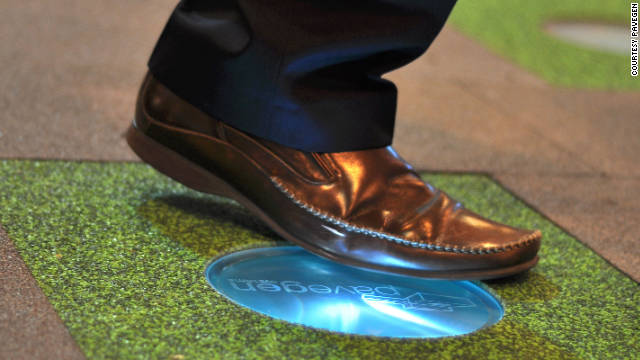 A company in England has come up with a paving tile that harvests the energy from footsteps.