
Zero Lot Line Homes are one of the things I would like to consider for the Sandhill Farm PUD. There are no provisions for Zero Lot Line Homes in Culver’s current ordinance and it is a missed opportunity on some of the smaller Lots of Record currently platted in town.
Currently there’s not a definition of Zero Lot Line homes on Wikipedia, so I don’t get to cheat and use that reference this time. I did do some searches and found discussions regarding them here, here and for a negative viewpoint, here.
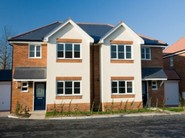 Zero Lot Line Homes are usually placed in zoning districts with higher densities, such as R-2 and R-3 districts, but they are becoming more common as in-fill developments where small undeveloped parcels are subdivided in existing neighborhoods. In a zero lot line development the setbacks are reduced to zero (but not always) on one or two sides of a property allowing the homes to be built side-by-side or back-to-back with a common wall on the property line. Rather than building them in a row, like with multi-family town homes, they will maintain one Side Yard, a Front Yard and often a Back Yard. They can be build in duplex, triplex and quadplex configurations.
For a municipality, zero lot line developments maximize the use of available utilities as they require less frontage and the corresponding reduction in water, sanitary sewer and storm sewer lines for the homes. It also increases density allowing better use of property closer to the town center without the need for increased services. The increased density is one of the things that the U.S. Green Building Council promotes in their LEED certification as it is a more efficient use of resources.
For the homeowner, the zero lot line development allows the autonomy of home ownership, but with a reduction of cost (less property), more efficient heating and cooling (shared wall), and a reduction in yard work and maintenance.
For the developer, the zero lot line development allows more efficient use of property and utilities. It creates a way to build a lower income bracket home without compromising on the home size. And, it allows more flexibility in purchase options, in that the dwellings can be offered as rentals with a transition to condos or standard ownership according to the needs of the residents.
The negatives are no different from arguments used against any multi-family development. The negative article above talks about fire fighting concerns that are really no different than what you would find in any townhouse development. That is a Building Code issue that would be addressed in construction. The greater density is becoming a positive, rather than a negative as costs soar and land comes at a premium. It is just adding another choice for homeowners, possibly a choice that makes a difference between home ownership and renting.
As I move forward, I will add more information about zero lot line developments and some concept plans. The configurations need to be driven by the land use plan for the PUD, but I think this an option that can help with providing good, affordable housing as part of this development.
Kevin, I was told you had something on the marina PUD on your site but I couldn’t find it. If its here would you direct me to it please? I’d like to read what you’ve written, figure out how to incorporate it since you’re a builder.