
Investments are generally a growing portion of your net worth. To that end, almost everyone is in the stock market in some form. If the company you work for has a 401(k) or other retirement plan that you participate in, you are in the stock market. You may also have a separate investment account, bank account or an IRA. If you buy a house, you’re in the stock market. If you have an insurance policy, you’re in the stock market. In some cases you’re making active decisions and in others, your participation is passive.
You will hear advice about having a diversified portfolio to protect yourself from the potential failure of one large investment. For stock or bond investments, this is often part of the rational for investing in mutual funds and Exchange Traded Funds (ETFs). To personally own a diversified range of stocks would require an unreasonable amount of money, and to keep up with them would require an unreasonable amount of time. Thus you pay a small fee as a fund shareholder to have someone else do the heavy lifting. While I talk about the value of a set-it-and-forget-it investing strategy, there are things which require some attention.
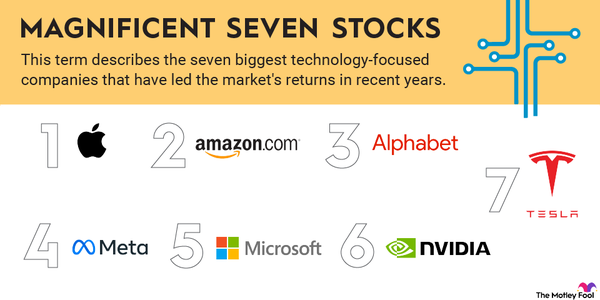
Mutual funds, ETFs and their managers are judged and rated constantly. This means they want their funds to do well. As an investor in those funds, you hope for the same thing… but sometimes this works against your efforts to diversify. Often funds with quite different advertised investment strategies end up investing in the same stocks because they’re hot. You buy several funds thinking you’re diversifying, but that’s not necessarily the case. Currently, the bulk of the market growth has been in the stocks of the companies known as the Magnificent Seven. A large portion of the rise in the market indexes over the past few years (I’m writing this in the Fall of 2025) has been pushed by these seven stocks. Fund managers would be foolish not to include some exposure to them in their portfolios, but when each of your theoretically diversified holdings in multiple fund types holds one of these stocks, you may find that you have more single stock exposure than you thought or wanted.
Personally, this hasn’t been an issue for us, but we have a high risk tolerance. If our risk tolerance was low, we could be looking at cause for some serious stress. This is something that each of you have to judge and learn individually. When you’re diversified, a drop in one part of your portfolio will reduce your return, but not sink your goals. If you’re highly concentrated, a drop in the concentrated portion can have a major impact. Conversely, holding on to a winner that continues to rise, could make your portfolio grow faster.
The traditional safe portfolio shoots for a 60/40 mix of stocks/bonds. This is considered safe enough to continue as you head into retirement. The theory of that mix is that you need stocks for growth and to beat inflation, but the bonds will temper any drops in the stock market. With our high risk tolerance, our investment strategy has always been much more aggressive than 60/40.
And still is. To this day, we hold very few bonds. We have weathered extreme downturns without selling anything and profited on the bounce when others panicked. My advice is that you factor your age into your risk tolerance profile. From your personal experience, you need to:
- Decide your investment horizon
- When do you need the money?
- Determine your risk tolerance
- Can you stomach a market drop and take a Tums in lieu of selling? Charlie Munger’s 50% drop rule.
- Determine your investment value goal.
- In my way of thinking, if you are well on the way to your goal value or have surpassed it, you can afford to be more aggressive and have time to weather any downturns. But that’s because I always feel like more money gives you more options. (F.U. Money) The other way to think about meeting your investment goal is to reduce your risk to a minimum to keep up with inflation and then coast to retirement. Different strokes for different folks.
Another factor to consider is home or property ownership. Often advisors suggest not including your home as an asset in your net worth, since it requires maintenance and other costs and it’s your shelter, so if sold, would have to be replaced. All that is true, but it is also an inflation hedge in your overall net worth, much as bond investing is.
In the end, diversification is an important tool for protecting your net worth, growing your portfolio and to help you sleep at night. The last one in that list is the one that lets you truly understand your risk tolerance.
++++++++++++++++++++++++++
A few miscellaneous related thoughts:
- Is your home and asset or a liability?
- It depends. If I’m going to the bank for a loan, I list it as an asset. If I’m doing my own personal math on what we need to retire, I discount it. Home ownership comes with costs. Assuming your home is paid off, you still pay Taxes and Insurance. A home requires maintenance including things like mowing the lawn, trimming bushes, painting, etc. Even if you do those yourself, there is a cost in time and some money for supplies. Then there are big ticket costs such as replacing a roof, windows or other items that wear out over time.
- Theoretically, your home, like other property, is a hedge against inflation since it should appreciate in value. Remember though, everyone else’s home is appreciating too and renting as an alternative, continues to become more expensive.
- If you sell your home, you’re likely to buy one of equal or greater cost, even if it’s not necessarily better. Else you’re renting and paying out money that way. Unless you seriously downsize, it’s probably not an improvement on your net worth by selling it.
- You can borrow against it, so it’s an asset in that sense, but again, you’re back to leveraging your shelter… which you can’t do without.
- Owning property (other than your home) is also portfolio diversification.
- For this to be true, this has to be speculative, meaning you think it is poised to increase in value over the cost of holding it, i.e. insurance, taxes, etc. or it produces income on its own, through your own efforts such as farming or through renting it to others for income. Again, income has to be above the cost of holding it.
- Shares in the Company you work for…
- If you are working for a larger company, you are often offered or given company shares as part of your compensation or as a contribution to your 401(k) or other retirement plan. If it’s a publicly traded company, you can buy shares on the market. This is a double edged sword. On one side, you may well have inside information and know the company is doing well. On the other side, if you’re wrong and the company fails, you could lose your job AND your savings in one fell swoop! Be cautious in how you use this “opportunity”. (Here’s a colloquialism from my father: “Sometimes you need to know which “opportunities” to turn down…”)
- Owning your own business can definitely contribute to a lack of diversification. As with the company stock issue above, you have invested capital in the business and you depend on the business for your day-to-day income. You do benefit from the control this allows you. You control your own destiny. This can be a great source of wealth. On the flip side though, if the business’s value is based mainly on you, the work you do, and the connections you’ve made, it may be hard to sell when you’re ready to walk away. In my case, Easterday Construction will be shutting down when I decide to retire. There is some limited value, but for the most part, I am not counting the business as an asset that I will be able to convert to cash. For the most part, we treat Becky’s business, Berger Audiology, the same way.