Met another Lurker…

It always comes as a bit of a surprise when I meet a Lurker in real life (IRL): “So, I’ve been meaning to ask, are you the one that writes the Easterday Construction Blog?” Why yes I am!

So few people actually comment, I generally assume I’m talking to myself. This was the second one in the last few months that said they ran across my blog and ended up going down the rabbit hole of Culver commentaries I’ve posted. So far, all of them have been complimentary of my insight and my writing. Since I’m often sitting here banging something out that I have bit my tongue about in some meeting… that’s positive! I think they even used the term “thoughtful analysis” too. That’s flattering and makes sense. That’s often why I don’t say it at the meeting, i.e. I’m more organized in writing and definitely able to put thoughts together better if I have time to let them simmer. For this reason, I don’t think I ever could be a successful politician. It’s not that I can’t think on my feet, it’s more that I have so many thoughts that pulling together a cogent response takes some time. Whatever comes out of my mouth, spur of the moment, probably isn’t the best answer and definitely isn’t properly fleshed out.

It was good to get some feedback and have a back and forth discussion on some things. Culver politics, Esmie, One Marshall County and, of course, The Dunes, where the main topics of conversation. I learned some things from another perspective and shared a few things that I know better than to put in writing! Ha!

Along with this Lurker/new friend, I was talking to some old friends and they were quizzing me about The Dunes. I was a little surprised about some of the misinformation they had. As a follow up, I sent them a couple of blog links. They obviously went down the rabbit hole as well, since they responded back that Culver should hire me for the Czar position. What’s funny about that is I would (and occasionally do) do that for free. But Culver often doesn’t use the resources it has. There are lots of talented and knowledgeable people in the Culver Community that are not residents. I served on the Culver Chamber of Commerce board for years and it was a joke that of the 10 board members at that time, only 3 of them could actually vote in a Town election. The same thing could be said for a large portion of the Chamber membership in those years. Yet we were people with a passion for moving Culver forward. (During that time, the Chamber spearheaded the Charrette, a new Comp Plan and spawned the Second Century Committee.)

Non-resident Culver talent has been called to participate in things like Culver Crossroads and the Comprehensive Plan Committee. These are great uses of that talent and knowledge, but most of those people that stepped up for those one-time committees, are just a phone call away when Culver is looking at the one-off projects too. The one-offs often have large impacts. Sometimes it seems we fall into the fallacy that you have to be located at least an hour away to be an expert. Culver has paid good money to out-of-town consultants, mostly with good results, but they rarely have the whole picture. They are called in for the one-off project without much understanding of how that project will weave into Culver’s tapestry of history, culture and goals for the future.

Winning an election is a form of a popularity contest. The ability to get elected doesn’t make you an expert in all the things you’ll need to make important decisions on as an elected official. But as a politician, you have shown a talent for rallying people. I would suggest that council members put that political talent to work and surround themselves with a cadre of people that fill the gaps in their expertise. If all the council members pooled their individual cadre of human capital resources, their individual advisory committees so to speak, there would be a standing taskforce of diverse talents that could be called on to help the council move Culver forward. But then, I’m mostly talking to myself…

Culver Building Permit Fees

Sometimes it takes an outside voice to change things… Rob Hurford with Culver Storage Unit Solutions came before Culver Plan Commission on October 17th to request relief from permit fees on their project. They are building mini storage units on the property west of The Paddocks.

Around 2017/2018, Jonathan Leist, then Culver Town Manager, spearheaded increased building permit fees. The increases were based on what was being charged in larger surrounding areas rather than the cost of services rendered. I protested this at the time, saying they were punitive, unreasonable and comparable fees had been cherry-picked to justify high fees… I was mostly ignored with the argument being presented that the building permit fee was still such a small part of the overall project cost for lake houses and commercial structures that it would not stop construction. I argued that wasn’t the point! The money collected does not go to the plan commission, but to the town’s general fund, i.e. it was a money maker, not a service fee.

The permit fees for the storage unit project were over $17,000. That was partially because the County was requiring each building to be permitted separately, rather than looking at the project as a whole, but also because Culver piled on. These are simple. single story, pole building construction with no water or sewer hook-ups. There will be minimal electrical for lighting. That means that Marshall County’s Building Inspector will have very little to look at and Culver’s Building Commissioner can almost do his job looking at setbacks with a drive-by…

Bass Lake Storage

Mr. Hurford is the Building Inspector for Warsaw, IN. He said in Warsaw, the permit fees would amount to 6% of the Culver fee. They have completed these projects in Winamac and Bass Lake and fees there were less than 15% of the Culver fee.

Culver’s Building Commissioner, Steve Gorski, did a review of permit fees based on costs and has provided the plan commission with revised numbers. These changes were passed on first read and were used to lower the fee for the project to $9k. Still high (and still inflated by the County in my opinion), but much better than the original $17k.

The forlorn fire hydrant that was removed from Sand Hill Farm Apartments

I’m pleased to see that the Plan Commission is taking steps to correct this one. It ultimately falls on the Town Council to make the Ordinance change. Hopefully they follow through. There are other, regressive, junk fees the town charges that don’t reflect services rendered, i.e. private fire hydrants, private fire sprinkler systems, etc. Hopefully this will prompt a review of some of these fees as well.

Culver Redevelopment Commission & The Dunes

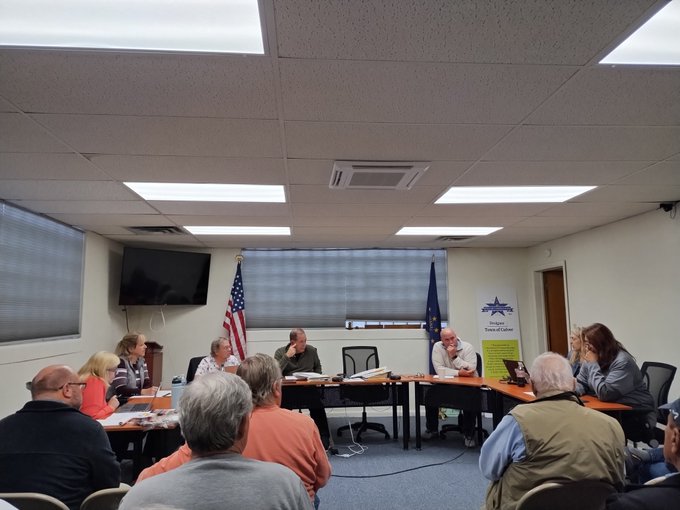
CRC meeting October 16, 2023

The October 16th meeting of the Culver Redevelopment Commission had a pretty full house and the majority of the meeting was taken up with a Public Meeting (not Public Hearing) on The Dunes. I was pretty proud of Culver as the majority of the questions were well thought out and asked respectfully. There were only a few questions I thought were irrational and even those were asked succinctly and calmly. I was also pleased to see that all of the Town Council members and a few of the candidates for Town Council were in attendance to listen.

Burke Richeson spoke for the Developer and did a nice job. Only getting a little vex’d when another attorney representing opposition spoke. Kevin Danti, Culver Town Manager, did a good job of keeping things moving and controlling the conversation. (I was going to link to Kevin’s page on the town’s website, but it hasn’t been updated.)

USGS Map

There were questions about environmental concerns, but these seemed to center on the effect on Lake Maxinkuckee. It was stated by Karen Shuman, who is on the Lake Maxinkuckee Environmental Council (LMEC), that LMEC had determined that the property is not within the Lake Maxinkuckee Watershed. I’m not sure that’s 100% correct, but it is at least mostly correct. Lake Maxinkuckee’s watershed is not large, but since the lake is mostly sustained by springs, the quality and quantity of ground water is important. That said, besides the lake, there are other environmental concerns, one the bigger ones being the surface runoff flow to the wetlands at the north side of the property and the town well fields just north of the property. Protection of those are critical.

Nearly Full House at the October Redevelopment Commission Meeting

Most of the conversation was well presented and questions were mostly answered with the exception of questions regarding the bond structure. Those got rather deep and ended with an offer from the town to provide a visual chart and breakdown to make the flow of funds more understandable. At this time, an agreement between the Town and Developer has not been reached, so the final numbers remain in flux. Progress is being documented on the Town’s Website in a link to Dunes. They stated a plan to document the questions heard at this meeting as well as others under a Frequently Asked Questions (FAQ) section.

Aside from the bonding, which was confusing to all involved, I was a little confused about the Tax Incremental Financing District (TIF) discussion. This was presented by Marty Oosterbaan, Commission Chairman, and I think most people in attendance didn’t know the right questions to ask. A couple of the things that left me puzzled were: 1) was the new land area for The Dunes being taken into the existing downtown TIF as discussed or would it stand alone; 2) was there one new TIF area or two? There was discussion of a 20yr TIF (residential) and a 25yr TIF (commercial) to cover the areas with rental apartments. How do these fit? There was also a discussion about how this would affect local residents and again, the discussion of taxes were muddy. It was stated that there would be no effect for the life of the TIF, but I don’t believe that to be correct, since there will be a reassessment and taxes levied on the new development which could affect neighboring property.

Another positive I heard last night was the future involvement of Michiana Area Council of Governments (MACOG). Culver is already working with them on the new Comprehensive Plan and have engaged them for help on The Dunes as well. They will be conducting traffic studies, apparently including boat traffic studies. Hopefully they will also step in to fill the Urban Planner role I suggested here before. It would be interesting to see if they address the issue of suburban sprawl and disconnection of subdivisions in Culver I discussed in this post. Would this development be more acceptable if it followed the streets and alleys development grid found on the east side of South Main Street rather than as a controlled access, separate neighborhood? An interesting question…

Though there weren’t pitchforks and torches at this meeting, the tenor of the conversation made it clear that the community is not embracing this project yet. There were comments about screening it so it’s not seen and changing the entrance to face S.R. 17 in lieu of South Main Street, as discussed here before. These ideas treat it as if they expect an eyesore or having nothing to contribute to Culver. While there may be reasonable concerns, the Town government seems to be on a path to address them the best they can. There is good reason to be cautious, but there should also be efforts to take advantage of the positives that could come from this.

Urban Planner

Riffing off my last post, here are a few things that I think an Urban Planner or similar professional can bring to the table… In the vein of my post, “Culver Needs an Infrastructure Czar”, an Urban Planner could step back and take a holistic approach on how this affects Culver now and into the future making sure we aren’t making another two steps forward, one step back mistake. I’ve broken these things up into major headings for some organization:

Infrastructure

in-fra-struc-ture – /ˈinfrəˌstrək(t)SHər/ – the basic physical and organizational structures and facilities (e.g. buildings, roads, power supplies) needed for the operation of a society or enterprise.

USGS Map
  1. Existing Streets and Right of Ways – Are we planning for the additional traffic on South Main Street? I understand that this ROW will be expanded to 50′, so that’s a great first step!
  2. Existing Streets and Right of Ways – Are we addressing street alignment with existing streets that T into South Main Street? (Provisions for future street alignment was made when Garden Court was built, so Tampa Street should work.)
  3. Existing Streets and Right of Ways – Are we going to address the intersection of South Main Street and Davis Street? This is currently a dangerous intersection, which will only get works with more traffic.
  4. Existing Streets and Right of Ways – What changes in traffic patterns will result and how will they affect Davis Street, Ohio Street, Prado Street, South Main Street, Tampa Street, Tamarack Road, Wabash Street, West Shore Drive, etc.
  5. New Streets – Will they/should they align with existing streets as they meet South Main Street?
  6. New Streets – Will they/should they comply with the Complete Streets Ordinance?
  7. New Streets – Will they/should they allow for future connections to future developments, i.e. a stub street to the south in anticipation of future development on adjacent properties?
  8. New Streets – Will anything we’re planning today affect the future extension of West Shore Drive to S.R. 17 as shown in the Comprehensive Plan? Does The Dunes make this more or less appropriate.
  9. Water – Do we have sufficient water for fire sprinklers for the new apartments?
  10. Water & Sewer – It has been determined that we have capacity to add this facility, but at least with the sewer, we will be using up all of our excess capacity. Are there plans to create additional capacity for the future, i.e. What if something new is proposed that is desirable and can’t wait for a multi-year sewer plant upgrade or what if the Beste property (which is annexed, so we are required to serve it and is current for sale) initiates a new development plan?
  11. Water & Sewer – While the town and developer have determined (rightly in my opinion) that a direct street connection to S.R. 17 is not desirable, are we planning easements to extend water and sewer through The Dunes for future development to the west? That area is currently zoned Industrial and is and the area on the opposite side of S.R. 17 is slated as future industrial in the comp plan revisions. Sizing and locating those lines and that easement connection are important, though they remain best guesses.
  12. Water & Sewer – It appears to be the plan to extend water and sewer south through the new development rather than in the South Main Street Right of Way (a mistake in my opinion), so what arrangements are being made for future development to the south? Not just to the next adjacent property, but to future development on Tamarack Road and potentially down to Lost Lake? With this development and the “Toy” storage facility south of the cemetery, this is currently the edge of town seeing the most development. Are we planning appropriately to support more?
  13. Storm Water – There has not been a drainage plan shared, so all I can go by is the USGS map (above) which show this site mostly draining to the wetlands and Davis Street to the North. I would anticipate minimal issues if they use standard stormwater detention.
  14. Storm Water – The storm sewer line on Davis Street is shallow and has very low slope. Care will need to be exercised to avoid overloading this line.
  15. Storm Water – Garden Court has a detention pond that exits into a dissipation trench on the south side of the property. This was sufficient to prevent erosion and protect the farm field at the time. Provisions will be required to accommodate this if this solution is no longer appropriate. Unlike the dispute between The Riggings and Maple Ridge, this installation was approved during construction. Nevertheless, this should be accounted for in the drainage plan for The Dunes. (In my opinion, the same applied to Maple Ridge as The Riggings drainage was an existing condition.)
  16. Storm Water – There are not storm sewer inlets on the south end of South Main Street and the ones that existing on South Main Street now, drain to the line in Davis Street. Long range planning would suggest this needs to be addressed. Again, just going by the USGS, best guess is that this would drain to Lost Lake unless more extreme measures are taken. Area for some municipal detention may need to be planned.

Aesthetics

aes-thet-ics – /esˈTHediks/ – a set of principles concerned with the nature and appreciation of beauty, especially in art.

  1. There have been many discussions regarding how this project will look. Garden Court cleared some of the area along the street line, but took pains to save the best of the mature trees along South Main Street. Would including a street tree plan that enhances South Main Street help with some of the concerns?
  2. There have been complaints that these will probably be (we have not seen examples) cookie cutter style houses with a minimal variety of style. This is very subjective, since some people appreciate neighborhood conformity and others do not. But including some minimal public input and input from a paid outsider (Urban Planner) may help make this more palatable.
  3. A Boulevard entrance could enhance the public face of this development and reduce the fears of existing residents. Using the easement set aside by Garden Court, there is sufficient space for this.
  4. The charrette that was completed for Culver years ago identified themes that should be considered in new developments such as the continued use of field stone. (Look at the townhouses at The Paddocks.) Has this been suggested and promoted? We literally have a Bungalow District in Culver. Has there been any suggestion that some of that theme should be continued?
  5. The landscaping will make a huge difference in how this development appears. Has there been any discussion of tree species? Sustainable Landscaping? Street Trees?

Culture

cul-ture – /ˈkəlCHər/ – the customs, arts, social institutions, and achievements of a particular social group.

  1. What steps can be taken to see a rotation and integration of existing residents into this new facility? One benefit would be to free up larger homes currently occupied by empty-nesters for new families in town.
  2. What steps can be taken to integrate the new residents into the fabric of Culver? Much like Job Fairs, a Club Fair might be appropriate, introducing new residents to existing groups such as Kiwanis, Lions Club, the various Churches, etc. All of them are hungry for new members.
  3. When the two developments at Sand Hill Farm were starting out, the Visitor’s Center created baskets with things to introduce new residents to Culver. Much like the old Welcome Wagon, this was a good first step. There’s no good way to judge how successful this was, but the residents were grateful and probably found out about the offerings of local businesses that they otherwise might not have know about.
  4. One obstacle to integration is the general design of subdivisions like this. They tend to create enclaves and turn their backs to the surrounding communities. This design works and sells, but it changes things. As proposed, the new homes will have backyards facing South Main Street. The backs of these houses will be facing the fronts of their neighbors on the east side of the street. This is far from welcoming. What can be done to help with this?
  5. Are there other communities going through this kind of change that are comparable? What can we do to emulate their successes and avoid their mistakes. Carmel and Fishers have subdivisions like this going in right and left, but we’re feeling the difference of this in Culver, a rural community. How do we make this better?

I feel that an outside eye is needed here. I’m sure I’ve only scratched the surface of things that should be considered. Someone (or firm) that has worked with communities like ours and has experience in this type of change to smaller towns. Just like the funds being expended on outside legal advice and outside financial advice, this is place where we could benefit from planning advice. I think it could go a long way to making things better.

Scale

It seems that The Dunes is not just the talk of Culver, but that has bled over into other areas of Marshall County. It came up in side conversations at the last One Marshall County meeting, which was interesting. Local Architect, Brent Martin, made the comment, “300 doors? That’s a small community.” That made me think. Most of the conversations in Culver revolve around that number being more than 25% of the current population of Culver. So Culver grows by about 20% with this addition. That number is 17% of the population of Argos. That number is 61% of the population of LaPaz. That number is less than 3% the population of Plymouth. It’s probably at least 6 times the population of Burr Oak! And yes, all these numbers assume that there is no more than one soul behind each of those 300 doors; an unlikely prospect.

But this is an unusual conversation. I don’t recall that kind of percentage being discussed when other developments have been planned. It’s more usual for there to be a discussion about jobs created, kids in school, etc. Few communities in our area would consider adding population a negative. I know the fact that The Paddocks and Sand Hill Farm Apartments was adding residents was never discussed as a percentage, though using the same fuzzy math, they added 6% to Culver’s population.

I’ve heard from multiple people how much this will change Culver. Many of these are people that moved here and undoubtedly created some change in the fabric of the town as well. When I look at the pie chart I included here, 20% doesn’t seem that large to me. Though most of us know the 80-20 rule, I doubt that this 20% will be that cohesive and organized.

But this is also why I’ve advocated for some additional urban planning input on this. I think the Town has done a reasonable good job in hiring appropriate legal representation. They have hired appropriate financial representation. Why not hire a consultant that will look at the land-use/infrastructure/social-fabric parts of this addition to the town? It would seem to be money well spent considering the amount of angst it is causing with current residents. It will never and has never been easy. Back in the dark ages when I was on the Culver Chamber of Commerce board, Eric Freeman, then Chamber President, and I joked that the unofficial motto for Culver was, “Change is bad, even if it’s Change for the Better.” That’s one thing that hasn’t changed…